Pierce County Well Water Testing
Private-well guidance for Pierce County, Nebraska: USGS area-risk estimates for arsenic and nitrate, a recommended test panel, and how to get your own well tested at a Nebraska-certified lab.
Pierce County groundwater risk (area estimates)
These are modeled USGS estimates for the county area — not a measurement of your specific well.
Arsenic
area estimate4%
modeled chance a well in this area exceeds 10 µg/L (the EPA limit).
34% chance of exceeding 5 µg/L.
Most-probable concentration category: <=5 ug/L.
Nitrate
area estimate3.94 mg/L
predicted nitrate (as N) for domestic-supply depth.
This estimate is below the 10 mg/L EPA limit, but individual wells can still exceed it.
Private wells
area estimate3,210
people on private wells in Pierce County.
Roughly 1,284 households, estimated from the USGS modeled domestic-supply population.
Area context
Additional state-only or optional layers for Pierce County, shown where the data exists.
Uranium
area estimateA state-only uranium model is not available for Nebraska. See observed samples and test your own well to learn its uranium level.
Radon
area estimateA state-only radon model is not available for Nebraska. See observed samples and test your own well to learn its radon level.
Primary aquifer
area contextWells in Pierce County most likely draw from the High Plains aquifer (USGS national aquifer code 107). This is the dominant principal aquifer mapped under the county area, not a determination for any single well.
Agricultural land use
area contextAbout 69% of the Pierce County area is row-crop farmland (USDA Cropland Data Layer). Intensively farmed row-crop land raises the likelihood of elevated nitrate in nearby groundwater, so it is a reason to include nitrate in your test panel. This is land-use context for the county area — not a measurement of nitrate in any well.
These figures are USGS area estimates: statistical groundwater models describing how likely elevated contaminant levels are across a county. They are not designed to predict the concentration in any single well. Only testing your own well reveals its water quality.
Recommended test panel for Pierce County
- coliform
- arsenic
- nitrate
Coliform bacteria is recommended for every private well as the universal baseline test. Arsenic is flagged because the USGS area model estimates a 34% chance of exceeding 5 µg/L. Nitrate is recommended because about 69% of this county area is row-crop land (USDA CDL), a land-use predictor of elevated groundwater nitrate — this is area context, not a measured concentration. The federal loan minimum (FHA, VA, USDA) tests for coliform, nitrate, nitrite, lead.
Federal FHA, VA, and USDA home loans require testing for coliform, nitrate, nitrite, lead at the point of a federally-backed loan. See the program-specific rules: FHA well test, VA well test, USDA well test.
Already have a well water test? Upload my well test
How Pierce County compares across Nebraska
Where Pierce County's modeled area estimates sit relative to the other Nebraska counties in our analysis.
- Arsenicnear the Nebraska median
Pierce County: 4% · Nebraska median: 4% · flagged in 46 of 93 counties.
See all Nebraska arsenic data → - Nitrateabove the Nebraska median
Pierce County: 3.94 mg/L · Nebraska median: 2.60 mg/L · flagged in 7 of 93 counties.
See all Nebraska nitrate data →
Municipal (public) water in Pierce County
Most Pierce County residents are served by a public water system, not a private well. If that's you, open your city's tap-water quality report:
Prefer a Simpler Option?
Can't find a convenient local lab? Mail-in testing offers EPA-certified analysis without appointments or travel.
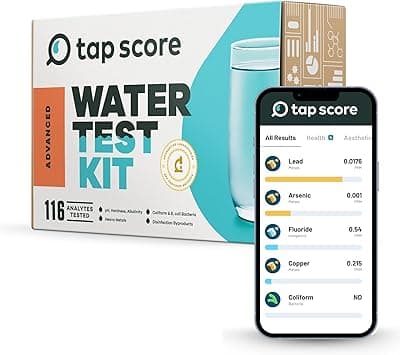
SimpleLab
Advanced Home Water Test
$269
Comprehensive water analysis testing over 200 contaminants including bacteria, heavy metals, and chemical compounds.
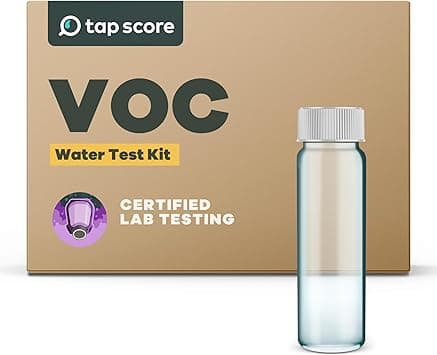
Tap Score
Volatile Organic Compounds (VOC) Test
$139
Detects volatile organic compounds including industrial solvents, fuels, and chemical contaminants.
SimpleLab
Coliform and E. coli Water Test
$99
The bacteria test a private well needs before closing and once a year after.
Find a state-certified lab
Test your Pierce County well through a lab certified by the Nebraska Department of Health & Human Services.
Recognize & research well-water problems
Notice a problem? Diagnose it by symptom
Learn about these contaminants in drinking water
Data sources
Pierce County's estimates are modeled from public federal datasets. See the data & methodology for how we build, source, and validate them.
- USGS arsenic probability-of-exceedance model
- USGS nitrate predicted concentration, domestic-supply depth
- USGS domestic (private) well population density
- USGS principal aquifers
- USDA NASS Cropland Data Layer (CDL) 30m
- EPA/USGS Water Quality Portal (waterqualitydata.us)
- US Census TIGER/Line county polygons
By TapWaterData Editorial · Last updated June 26, 2026.
Pierce County well water FAQ
How do I test my well water in Pierce County?
Order a sample kit covering the recommended panel for Pierce County (coliform, arsenic, nitrate), then send it to a Nebraska-certified drinking-water laboratory. Certified labs use EPA-approved methods, so the results are defensible for a federally-backed home loan. You can also use a mail-in test kit for a convenient EPA-certified analysis.
What does the USGS arsenic estimate mean for my well?
It is an area estimate, not a prediction for your specific well. The USGS model describes how likely elevated arsenic is across Pierce County as a whole; an individual well in the county can be much higher or much lower. Only testing your own well reveals its actual arsenic level.
How often should a private well be tested?
The CDC recommends testing private wells at least once a year for total coliform bacteria and nitrate, and more often if you notice a change in taste, color, or odor, or after flooding or nearby construction.
Does Nebraska require well testing?
Federal FHA, VA, and USDA home-loan programs require a private-well water test at the point of a federally-backed loan. A state sale, rental, or recurring testing mandate was not independently verified for this state — consult your state's program.
Need whole-house or professional water treatment?
For the problems a pitcher or under-sink filter cannot fix — scale, rust and black staining, sulfur smell, well contamination, or test results you cannot explain. Tell us what is happening and we will connect you with a local water-treatment professional.
Stay Informed About Your Water Quality
Get EPA reports, filter recommendations, and safety alerts for your area.
Weekly water-quality guidance for your area. Unsubscribe anytime.