Could my well water be making my family sick?
What causes this
Coliform bacteria and E. coli
Gastrointestinal illness that follows your water can be a sign of coliform bacteria, and specifically E. coli, in the well — frequently from a nearby septic system or surface water reaching the wellhead.
Nitrate from the same sources
The same septic and agricultural sources that introduce bacteria can also raise nitrate, so a bacteria problem is a reason to check nitrate at the same time.
Is it dangerous?
If you suspect your water is making people sick, act fast: bacteria samples have a short hold time — about 30 hours — so the lab must receive the sample quickly or the result is invalid. In the meantime, use bottled or boiled water. Important caveat: boiling kills bacteria but it CONCENTRATES nitrate and arsenic, so boiling is a stopgap for bacteria only, not a fix for those chemicals.
The test that tells you
A symptom only narrows it down. To know for sure, have a state-certified lab test for:
- total coliform
- E. coli
- nitrate
Already have a well water test? Upload my well test
Prefer a Simpler Option?
Can't find a convenient local lab? Mail-in testing offers EPA-certified analysis without appointments or travel.
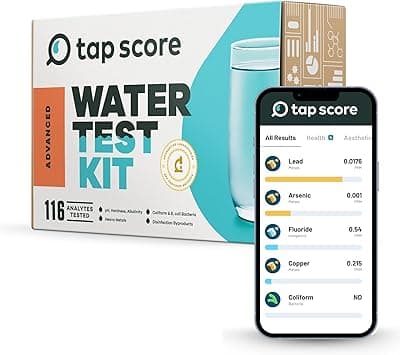
SimpleLab
Advanced Home Water Test
$269
Comprehensive water analysis testing over 200 contaminants including bacteria, heavy metals, and chemical compounds.
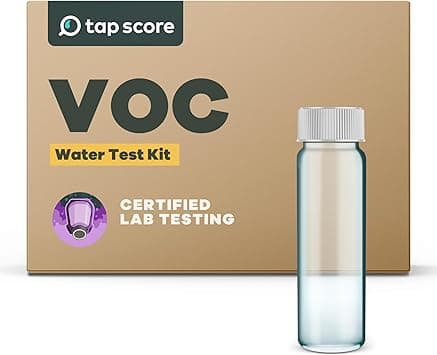
Tap Score
Volatile Organic Compounds (VOC) Test
$139
Detects volatile organic compounds including industrial solvents, fuels, and chemical contaminants.
SimpleLab
Coliform and E. coli Water Test
$99
The bacteria test a private well needs before closing and once a year after.
How to fix it
Shock-chlorinate the well to disinfect it, then RE-TEST to confirm the bacteria are gone — disinfection without a passing follow-up test does not prove the problem is solved. For ongoing protection, install UV disinfection or continuous chlorination. Then find and fix the source, which is often a septic system too close to the well.
- 1
Act fast and collect a bacteria sample
Because bacteria samples have a short (~30 hour) hold time, contact a certified lab right away and get a total coliform and E. coli sample to them within the hold time, or the result will not be valid.
- 2
Use bottled or boiled water meanwhile
Until you have results, use bottled or boiled water. Remember that boiling kills bacteria but concentrates nitrate and arsenic, so do not rely on boiling if those are a concern.
- 3
Shock-chlorinate and re-test
If bacteria are confirmed, shock-chlorinate the well, then re-test to confirm the bacteria are gone. A treatment step without a passing re-test does not prove the well is safe.
- 4
Add ongoing disinfection and fix the source
Install UV or continuous chlorination for ongoing protection, and find the source — often a septic system too close to the well — so the contamination does not return.
A symptom is a clue, not a diagnosis. Only a lab test of your individual well confirms what is in your water — do not assume a symptom is definitely harmless or definitely dangerous until you have tested. The county-level USGS area estimates elsewhere on this site describe a region as a whole and cannot stand in for testing your own well.
By TapWaterData Editorial
Frequently asked questions
Can well water make you sick?
Yes. Recurring stomach illness in a household on a private well can be a sign of coliform bacteria or E. coli, often from a septic system or surface water reaching the well. Because bacteria samples have a short (~30 hour) hold time, you should collect and deliver a coliform and E. coli sample quickly.
Can I boil my well water to make it safe?
Boiling kills bacteria, so it is a reasonable short-term step if bacteria are the concern. But boiling concentrates nitrate and arsenic rather than removing them, so it is not a fix for those contaminants — use bottled water or treated water instead until the well is tested and resolved.
What do I do if my well tests positive for bacteria?
Shock-chlorinate the well to disinfect it, then re-test to confirm the bacteria are gone — disinfecting without a passing follow-up test does not prove it worked. For lasting protection, install UV or continuous chlorination and fix the source, which is frequently a septic system too close to the well.
Need whole-house or professional water treatment?
For the problems a pitcher or under-sink filter cannot fix — scale, rust and black staining, sulfur smell, well contamination, or test results you cannot explain. Tell us what is happening and we will connect you with a local water-treatment professional.
Worried about your well water?
Get our plain-English guide to testing private-well water and reading the results.
Free forever. Unsubscribe anytime. We never share your email.
Stay Informed About Your Water Quality
Get EPA reports, filter recommendations, and safety alerts for your area.
Weekly water-quality guidance for your area. Unsubscribe anytime.