Choose a country: United States
Why does my well water leave blue-green stains?
What causes this
Copper corrosion from acidic water
Blue-green staining on fixtures is the signature of copper, dissolved out of copper pipes by low-pH (acidic) water. The acidic water corrodes the pipe and the copper deposits a characteristic blue-green stain.
Lead from solder and brass
The same acidic, corrosive water that leaches copper can also leach lead from solder and brass fittings, so blue-green stains can be a flag for lead as well as copper.
Is it dangerous?
Blue-green stains are a health concern, not just a cosmetic one. They indicate copper corrosion, and the same acidic water can also leach lead from solder and brass. So unlike a purely aesthetic stain, blue-green staining is a reason to test for copper and lead, not to dismiss it as cosmetic.
The test that tells you
A symptom only narrows it down. To know for sure, have a state-certified lab test for:
- pH
- copper
- lead
Already have a well water test? Upload my well test
Prefer a Simpler Option?
Can't find a convenient local lab? Mail-in testing offers EPA-certified analysis without appointments or travel.
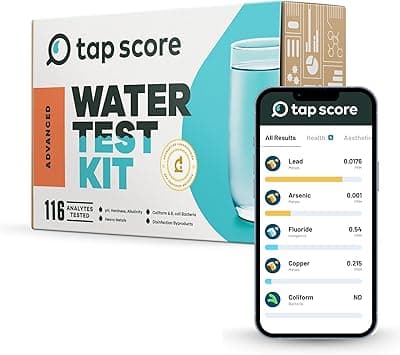
SimpleLab
Advanced Home Water Test
$269
Comprehensive water analysis testing over 200 contaminants including bacteria, heavy metals, and chemical compounds.
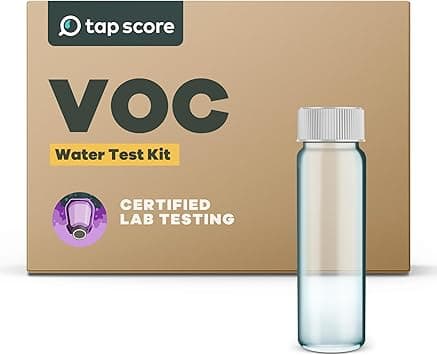
Tap Score
Volatile Organic Compounds (VOC) Test
$139
Detects volatile organic compounds including industrial solvents, fuels, and chemical contaminants.
SimpleLab
Coliform and E. coli Water Test
$99
The bacteria test a private well needs before closing and once a year after.
How to fix it
Because the root cause is acidic water, a neutralizer (acid-neutralizing filter) that raises the pH stops the water from corroding your copper pipes and leaching metal. A reverse-osmosis unit at the kitchen tap removes copper and lead from the water you drink and cook with.
- 1
Test for pH, copper, and lead
Have a certified lab test the pH along with copper and lead. A low pH confirms the corrosive water behind the blue-green stains, and the copper and lead results tell you the health picture.
- 2
Raise the pH with a neutralizer
Install a neutralizer to raise the pH so the water stops corroding your copper pipes and leaching copper and lead into your drinking water.
- 3
Filter drinking water at the tap
Add a reverse-osmosis system at the kitchen tap to remove copper and lead from the water you drink and cook with.
- 4
Re-test to confirm
After treatment, re-test the water to confirm the pH is corrected and copper and lead are at safe levels.
A symptom is a clue, not a diagnosis. Only a lab test of your individual well confirms what is in your water — do not assume a symptom is definitely harmless or definitely dangerous until you have tested. The county-level USGS area estimates elsewhere on this site describe a region as a whole and cannot stand in for testing your own well.
By TapWaterData Editorial
Frequently asked questions
What causes blue-green stains in well water?
Blue-green stains come from copper that acidic, low-pH well water dissolves out of copper pipes. The corroding water deposits the characteristic blue-green stain on fixtures, and the same acidic water can also leach lead from solder and brass fittings.
Are blue-green stains from well water dangerous?
They are a health concern, not just cosmetic. Blue-green stains indicate copper corrosion, and the same acidic water can leach lead from solder and brass — so it is worth testing for copper and lead rather than treating the stains as purely cosmetic.
How do I stop blue-green staining from my well water?
Because the cause is acidic water, install a neutralizer to raise the pH so the water stops corroding your copper pipes. Add reverse osmosis at the kitchen tap to remove copper and lead from drinking water, then re-test to confirm the pH and metals are corrected.
Need whole-house or professional water treatment?
For the problems a pitcher or under-sink filter cannot fix — scale, rust and black staining, sulfur smell, well contamination, or test results you cannot explain. Tell us what is happening and we will connect you with a local water-treatment professional.
Worried about your well water?
Get our plain-English guide to testing private-well water and reading the results.
Free forever. Unsubscribe anytime. We never share your email.
Get the Weekly Water Brief
One email a week on water testing, treatment, and what water-quality data means for your home.
One email a week. Unsubscribe anytime.