My neighbor's well is contaminated — should I test mine?
What causes this
Shared aquifer or source
Wells that draw from the same aquifer or source can be affected by the same contamination. A problem found in a neighbor's well is a reason to check yours, because you may be drawing from the same water.
Variable travel distance
How far a contaminant travels underground varies by the contaminant and the local geology, so being some distance away does not by itself guarantee your well is unaffected.
Is it dangerous?
A neighbor's contamination does not prove your well is contaminated, and it does not prove it is safe either. Because wells on the same aquifer can share a problem and travel distance varies, the honest answer is to test your own well rather than assume distance protects you.
The test that tells you
A symptom only narrows it down. To know for sure, have a state-certified lab test for:
- the contaminant your neighbor found
- coliform bacteria
- nitrate
Already have a well water test? Upload my well test
Prefer a Simpler Option?
Can't find a convenient local lab? Mail-in testing offers EPA-certified analysis without appointments or travel.
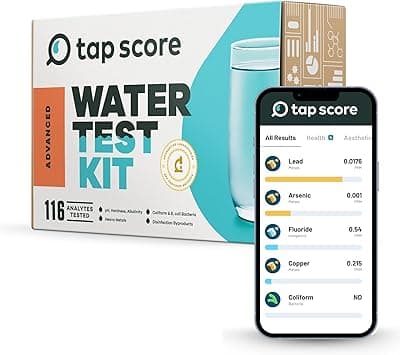
SimpleLab
Advanced Home Water Test
$269
Comprehensive water analysis testing over 200 contaminants including bacteria, heavy metals, and chemical compounds.
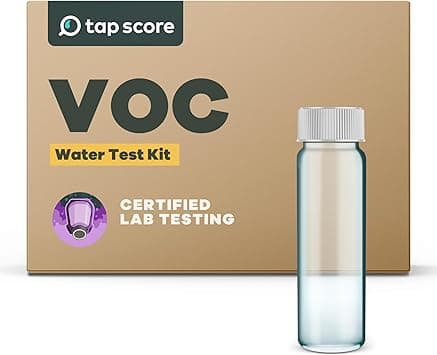
Tap Score
Volatile Organic Compounds (VOC) Test
$139
Detects volatile organic compounds including industrial solvents, fuels, and chemical contaminants.
SimpleLab
Coliform and E. coli Water Test
$99
The bacteria test a private well needs before closing and once a year after.
How to fix it
Test your well for whatever the neighbor's well tested positive for, plus a baseline of coliform bacteria and nitrate. What to do next depends entirely on which contaminant turns up and at what level — the right treatment for nitrate is different from the right treatment for bacteria or a metal, so let your results, not the neighbor's, guide the fix.
- 1
Find out exactly what the neighbor found
Ask which contaminant the neighbor's well tested positive for and at what level, so you can test your own well for the same thing.
- 2
Test your well for that contaminant plus a baseline
Have a certified lab test your well for the neighbor's contaminant and for a baseline of coliform bacteria and nitrate, since those are the most common private-well problems.
- 3
Compare your results to EPA limits
Compare each result to the relevant EPA limit or guideline. Your own numbers — not the neighbor's — determine whether and how to act.
- 4
Choose treatment based on your own results
Match any treatment to the specific contaminant your well shows; the right fix for nitrate differs from the right fix for bacteria or a metal.
A symptom is a clue, not a diagnosis. Only a lab test of your individual well confirms what is in your water — do not assume a symptom is definitely harmless or definitely dangerous until you have tested. The county-level USGS area estimates elsewhere on this site describe a region as a whole and cannot stand in for testing your own well.
By TapWaterData Editorial
Frequently asked questions
Should I test my well if my neighbor's is contaminated?
Yes. Wells that draw from the same aquifer can share the same contamination, and how far a contaminant travels underground varies by contaminant and geology. A neighbor's contaminated well does not prove yours is unsafe, but it is a clear reason to test your own water rather than assume distance protects you.
What should I test for if a nearby well is contaminated?
Test for whatever the neighbor's well tested positive for, plus a baseline of coliform bacteria and nitrate — the two most common private-well problems. Your own results, not the neighbor's, determine whether you need treatment.
Does distance from a contaminated well keep mine safe?
Not necessarily. The distance a contaminant travels underground depends on the contaminant and the local geology, so being some distance away does not guarantee your well is unaffected. The only way to know is to test your own well.
Need whole-house or professional water treatment?
For the problems a pitcher or under-sink filter cannot fix — scale, rust and black staining, sulfur smell, well contamination, or test results you cannot explain. Tell us what is happening and we will connect you with a local water-treatment professional.
Worried about your well water?
Get our plain-English guide to testing private-well water and reading the results.
Free forever. Unsubscribe anytime. We never share your email.
Stay Informed About Your Water Quality
Get EPA reports, filter recommendations, and safety alerts for your area.
Weekly water-quality guidance for your area. Unsubscribe anytime.