FHA Well Water Test Requirements
Buying a home on a private well with a FHA loan? Federal underwriting requires a drinking-water test from a state-certified lab before closing. Here is exactly what the FHA program checks for, the rules to watch, and how to get your well tested.
Does my FHA loan require a well test?
Yes. If the home you are financing is served by an individual (private) well, the FHA program requires a water-quality test before the loan can close. The sample must be analyzed by a laboratory certified by your state to test private-well drinking water, using EPA-approved methods.
Required minimum test panel
- coliform
- nitrate
- nitrite
- lead
At a minimum, a federally-backed loan test covers coliform, nitrate, nitrite, lead. Your state or lender may require additional analytes depending on local groundwater conditions.
FHA well-test rules
A water test is required
When a home backed by an FHA-insured mortgage is served by an individual (private) well, HUD requires a water-quality test before closing. The test must be performed by a state-certified lab using EPA-approved methods.
Required panel
The test typically covers coliform, nitrate, nitrite, lead — coliform/E. coli bacteria, nitrate, nitrite, and lead. Your lender may require additional analytes based on local conditions.
Well-to-septic distance: at least 50 feet
Under the HUD handbook, the well must be at least 50 feet from a septic tank (and farther from the drainfield) to limit contamination. An appraiser will note a well that appears too close.
Well-to-property-line distance: at least 10 feet
The well must sit at least 10 feet from the property line so that neighboring uses do not compromise it. Setbacks that fail the handbook can require an exception or repairs before the loan can close.
Prefer a Simpler Option?
Can't find a convenient local lab? Mail-in testing offers EPA-certified analysis without appointments or travel.
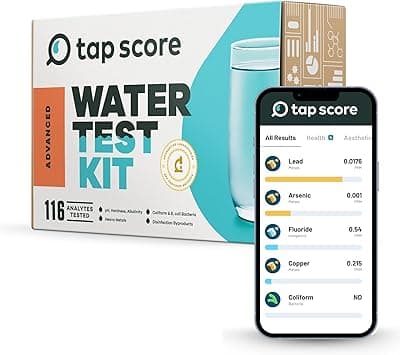
SimpleLab
Advanced Home Water Test
$269
Comprehensive water analysis testing over 200 contaminants including bacteria, heavy metals, and chemical compounds.
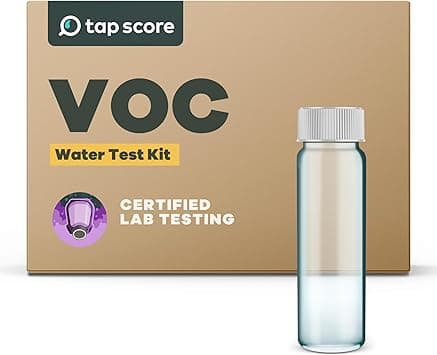
Tap Score
Volatile Organic Compounds (VOC) Test
$139
Detects volatile organic compounds including industrial solvents, fuels, and chemical contaminants.
SimpleLab
Coliform and E. coli Water Test
$99
The bacteria test a private well needs before closing and once a year after.
Find a state-certified lab
Your FHA test must come from a lab certified by your state. We list certification programs by state so you can find an accepted laboratory near you.
A loan test confirms the water quality of your individual well at the property you are buying. Area risk models — like the county-level USGS estimates elsewhere on this site — describe a region as a whole and do not predict any single well, so they cannot satisfy a lender.
By TapWaterData Editorial · Source: https://archives.hud.gov/offices/hsg/sfh/ref/sfh1-21b.cfm
FHA well water test FAQ
Does an FHA loan require a well water test?
Yes. If the property is served by a private well, FHA requires a water-quality test from a state-certified lab before closing. The standard panel checks for bacteria (coliform/E. coli), nitrate, nitrite, and lead.
How far must an FHA well be from a septic system?
The HUD handbook sets a minimum of 50 feet between the well and a septic tank, with greater distances from the drainfield. The well must also be at least 10 feet from the property line.
What happens if my FHA well water test fails?
A failing result usually must be corrected — for example with disinfection or a treatment system — and then re-tested to pass before the loan can close. A treatment device installed without a passing follow-up test does not satisfy the requirement on its own.
Does the FHA test prove my specific well is safe?
Yes — that is the point of it. The certified lab analyzes a sample from the actual well at the property you are buying. County-level USGS area estimates describe a region as a whole and cannot substitute for testing the individual well.
Need whole-house or professional water treatment?
For the problems a pitcher or under-sink filter cannot fix — scale, rust and black staining, sulfur smell, well contamination, or test results you cannot explain. Tell us what is happening and we will connect you with a local water-treatment professional.
Buying a home on a well?
Get our plain-English guide to testing private-well water and reading the results before you close.
Free forever. Unsubscribe anytime. We never share your email.
Stay Informed About Your Water Quality
Get EPA reports, filter recommendations, and safety alerts for your area.
Weekly water-quality guidance for your area. Unsubscribe anytime.