💧 TapWaterData

Best Water Filters for Arsenic Removal (2026)

5 filters tested
Updated April 2026
Reddit-Verified Reviews

Arsenic shows up above EPA's 10 ppb limit in 2,635 US community water systems serving over 215 million people, with the heaviest exposure across Arizona, New Mexico, Texas, and California groundwater systems. We picked 5 NSF/ANSI 58–certified reverse osmosis systems that independently test for arsenic reduction — no pitcher or faucet-mount filter has ever earned the certification, so reverse osmosis (or distillation) is the only verified path.

Quick Compare: Best Arsenic Filters

#1
BEST OVERALL

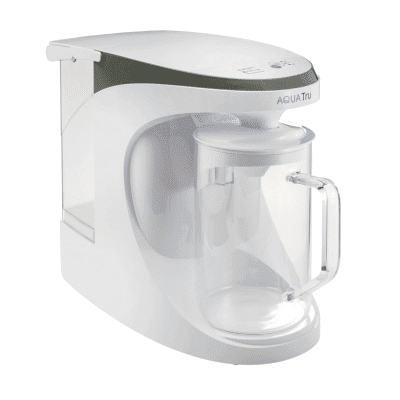
AquaTru Carafe Countertop Reverse Osmosis Water Purifier

Countertop

$349

Arsenic V reduction per NSF/ANSI 58 certification

View Deal
#2

AquaTru Classic Countertop Reverse Osmosis Water Purifier

RO System

$449

Arsenic V reduction per NSF/ANSI 58 certification

View Deal
#3

AquaTru Classic Alkaline Countertop Water Purifier

RO System

$475

Arsenic V reduction per NSF/ANSI 58 certification

View Deal
#4

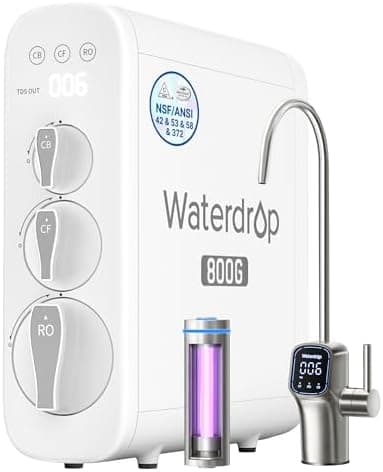
Waterdrop G3 P800 Tankless Reverse Osmosis System

RO System

$539

Arsenic V reduction per NSF/ANSI 58 certification

View Deal
#5
BEST VALUE

Waterdrop G3 P600 Under-Sink Reverse Osmosis System

Under Sink

$109.99

Arsenic V reduction per NSF/ANSI 58 certification

View Deal

What Reddit Says About Arsenic Filters

Top Reddit Recommendations

AquaTru Classic Countertop RO

User shared lab results showing residual arsenic dropped to ~0.054 ppb (well below EPA's 10 ppb MCL) after AquaTru filtration

I recently purchased the AquaTru classic countertop reverse osmosis system and sent a water sample for lab testing. Everything looks good except for arsenic and antimony. ... Arsenic level is 5.4E-5 [mg/L]

r/WaterTreatment

Waterdrop G2 (5-stage tankless)

Recommended for under-sink arsenic removal — tankless design, no storage tank to clean, strong flow

We're currently running a Waterdrop G2 5-stage and it cranks out the water without a storage tank, taking less space and giving better flow. ... We measure a drop of 350ppm TDS to about 15ppm which is just right for us.

r/WaterTreatment

Reverse Osmosis (general consensus)

Cross-thread consensus: undersink RO is the standard arsenic recommendation when budget allows; pair with home test kit

Undersink Reverse Osmosis (RO) systems provide best value for most and a backup to other treatments. Look for independent test results & brands that have been around awhile.

r/WaterTreatment

NSF certification (any brand)

NSF certification matters more than brand — independent verification is what separates verified arsenic reduction from marketing claims

I would put weight into NSF certs and brand support. Without NSF certs who knows what reductions you're actually getting, if any. ... The difference between something that's NSF certified and something that isn't, is like using sunscreen but finding out it's just lotion with no UV protection.

r/WaterTreatment

Common Concerns

  • Whole-house carbon filters are not specifically rated to remove arsenic — even when they include KDF media. At any meaningful arsenic level (e.g. 19 ppb), Reddit reviewers consistently push back toward a system explicitly certified for arsenic.
  • AquaTru durability complaints surface in long threads — RO membrane clogging within months, pump failure shortly after warranty. Plan for replacement filters on schedule and test water periodically rather than assuming the system holds performance forever.
  • Arsenic exists in two forms (arsenic III / arsenite and arsenic V / arsenate) and most NSF-58 certifications cover arsenic V only. Private well water without chlorination may contain arsenic III, which requires pre-oxidation before RO.
  • Marketed NSF certifications don't always match what's in NSF's public database. Reddit users repeatedly recommend cross-checking the manufacturer's claim against NSF.org's certified-product search before trusting the label.

Reddit Tips

  • Test your water for arsenic both before AND after installing a filter. The 'after' test is the credibility check — multiple Reddit threads describe owners who replaced filters and found arsenic still showing up due to wrong replacement parts or worn-out membranes.
  • If you're choosing between whole-house and under-sink, choose under-sink (or countertop) RO at the kitchen sink for drinking water. Whole-house carbon does not reliably reduce arsenic. Layer them only if you also want shower/laundry filtration for chlorine and sediment.
  • Verify the exact NSF certification on nsf.org's certified-products database, not just the seller's product listing. NSF/ANSI 58 (RO performance) is the right standard for arsenic — NSF/ANSI 53 alone is not sufficient.
  • If you're on a private well, get the type of arsenic identified (III vs V) before buying a system. State or county labs typically run this test for under $50 and the answer determines whether you need pre-oxidation upstream of the RO membrane.

Affiliate Disclosure: We earn affiliate commissions from purchases made through our links at no extra cost to you. This supports our testing and keeps our content free. Learn More

Detailed Filter Reviews

#1 BEST OVERALL
AquaTru Carafe Countertop Reverse Osmosis Water Purifier - Countertop Water Filter

AquaTru Carafe Countertop Reverse Osmosis Water Purifier

AquaTru

(1,040)
$349
Countertop

Arsenic V reduction per NSF/ANSI 58 certification

NSF/ANSI 58

The AquaTru Carafe is a 4-stage countertop reverse osmosis system in a glass-carafe form factor. It carries the broadest NSF certification spread of any product on this page (NSF/ANSI 42, 53, 58, 401, P473, and 372), independently testing for arsenic reduction along with 80+ other contaminants. No installation required — fill the top tank from your tap, and filtered water collects in the carafe below.

Contaminant Removal99% • Excellent
Flow Rate40% • Poor
Value Score80% • Good
NSF-42
NSF-53
NSF-58
NSF-401
NSF-372
NSF-P473

Key Features

  • NSF/ANSI 58 certified for arsenic reduction (and 53/401/P473 for lead, PFAS, emerging contaminants)
  • Countertop — no plumbing or installation
  • Glass carafe (no plastic in the dispense path)
  • 4-stage filtration including RO membrane

Our Review

The Carafe is the strongest single product on this page because it pairs full NSF/ANSI 58 arsenic certification with the broadest contaminant-reduction claim list (PFAS, lead, fluoride, chromium-6, nitrate, mercury, copper, chlorine). The countertop form factor means renters and short-term occupants can use it without modifying plumbing, and the glass carafe sidesteps the plastic-leaching question raised about some carbon-block pitchers. The trade-off is throughput: filling the top reservoir and waiting for RO is genuinely slower than turning on a tap connected to an under-sink system. If you have the budget and the kitchen counter space, the Carafe is the easiest yes on this page.

Pros

  • +Broadest NSF certification of any arsenic filter we picked
  • +No plumbing or installation — works for renters
  • +Glass carafe avoids plastic in the dispense water
  • +Independent verification via NSF/ANSI 58 + 53 + 401 + P473

Cons

  • -Slow throughput vs plumbed RO (fill-and-wait countertop design)
  • -1-gallon dispense capacity — refill more often than under-sink
  • -Annual filter cost ~$90
  • -Higher upfront price than basic pitchers

Specifications

Stages

4-stage

Capacity

1 gal

Filter Life

12 months

Annual Filter Cost

$90/year

Warranty

1 year

Removes 10+ Contaminants

Arsenic
Lead
PFOA
PFOS
Fluoride
Chromium-6
Nitrate
Mercury
Copper
Chlorine

Best For

Renters and apartments where under-sink installation isn't possible
Households wanting the deepest NSF certification spread
People who avoid plastic in their drinking water
#2 BEST VALUE
Waterdrop G3 P600 Under-Sink Reverse Osmosis System - Under Sink Water Filter

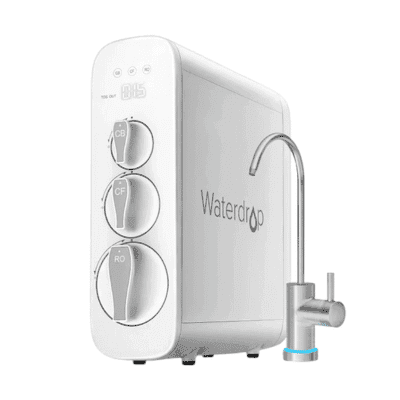
Waterdrop G3 P600 Under-Sink Reverse Osmosis System

Waterdrop

(199)
$109.99
Under Sink

Arsenic V reduction per NSF/ANSI 58 certification

NSF/ANSI 58

The Waterdrop G3 P600 is an entry-priced tankless under-sink RO system that holds NSF/ANSI 58 certification for arsenic and other heavy-metal reduction. Tankless design means no waiting for a storage tank to refill and a smaller under-sink footprint than legacy 5-stage systems. At ~$110, it is roughly one-third the price of the AquaTru Carafe.

Contaminant Removal90% • Excellent
Flow Rate90% • Excellent
Value Score95% • Excellent
NSF-58

Key Features

  • NSF/ANSI 58 certified for arsenic reduction
  • Tankless — fits in tight under-sink cabinets
  • 600 GPD output (genuinely fast for an entry-level RO)
  • Filter-life indicator built into the unit
AquaTru Classic Countertop Reverse Osmosis Water Purifier - RO System Water Filter

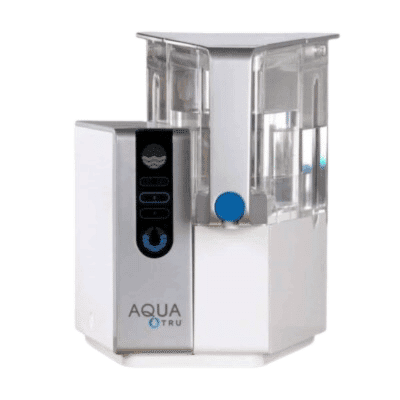
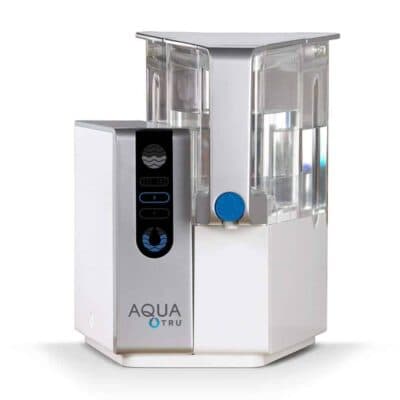
AquaTru Classic Countertop Reverse Osmosis Water Purifier

AquaTru

(536)
$449
RO System

Arsenic V reduction per NSF/ANSI 58 certification

NSF/ANSI 58

The AquaTru Classic is the higher-capacity countertop RO sibling of the Carafe, with a larger filtered-water reservoir and a wider 4-stage filter set. Same NSF certification spread as the Carafe (42/53/58/401/P473/372), but a different reservoir form factor that suits households with multiple drinkers.

Contaminant Removal98% • Excellent
Flow Rate50% • Average
Value Score70% • Good
NSF-42
NSF-53
NSF-58
NSF-401
NSF-372
NSF-P473

Key Features

  • Same NSF certification spread as the Carafe (42/53/58/401/P473)
  • Larger filtered-water capacity than the Carafe
  • Countertop — no plumbing required
  • 4-stage RO filtration
AquaTru Classic Alkaline Countertop Water Purifier - RO System Water Filter

AquaTru Classic Alkaline Countertop Water Purifier

AquaTru

(45)
$475
RO System

Arsenic V reduction per NSF/ANSI 58 certification

NSF/ANSI 58

The AquaTru Classic Alkaline adds a remineralization stage downstream of the RO membrane, restoring calcium and magnesium that RO would otherwise strip out. Same arsenic-removal capability as the Classic via NSF/ANSI 58 certification; the alkaline stage addresses people who don't like the flat taste of pure RO water.

Contaminant Removal97% • Excellent
Flow Rate50% • Average
Value Score65% • Average
NSF-42
NSF-53
NSF-58
NSF-401

Key Features

  • NSF/ANSI 58 certified for arsenic + 4-stage RO + remineralization stage
  • Alkaline post-filter restores calcium and magnesium for taste
  • Same countertop form factor as the standard Classic
Waterdrop G3 P800 Tankless Reverse Osmosis System - RO System Water Filter

Waterdrop G3 P800 Tankless Reverse Osmosis System

Waterdrop

(1,255)
$539
RO System

Arsenic V reduction per NSF/ANSI 58 certification

NSF/ANSI 58

The Waterdrop G3 P800 is a higher-capacity tankless under-sink RO system with smart-filter monitoring. Carries NSF/ANSI 42, 53, 58, and 372 — broader cert spread than the G3 P600 and including NSF-53 for additional health-effects claims (but not P473, so no certified PFAS-specific claim). 800 GPD throughput suits multi-person households where sink-side throughput matters.

Contaminant Removal95% • Excellent
Flow Rate95% • Excellent
Value Score75% • Good
NSF-42
NSF-53
NSF-58
NSF-372

Key Features

  • NSF/ANSI 42, 53, 58, 372 certified — broader than the G3 P600
  • Tankless design — no holding tank under sink
  • 800 GPD output for multi-person households
  • Smart-filter monitoring with TDS display

How We Chose the Best Arsenic Filters

Our recommendations combine laboratory data, real-world user experiences, and value analysis to find filters that effectively remove arsenic from your water.

Certification Verification

We verify all NSF certifications directly with NSF International's database. Claims of 'NSF tested' are not the same as 'NSF certified' — we only recommend filters with verified certifications for the contaminants they claim to remove.

Lab Data Analysis

We analyze each filter's certified test results from NSF International and independent laboratories. We verify contaminant removal rates, flow rate measurements, and filter capacity claims against actual performance data.

Real-World Reddit Analysis

We analyze hundreds of Reddit posts, Amazon reviews, and forum discussions to understand how filters perform in actual homes over months and years of daily use.

Value Assessment

We calculate the true cost of ownership including initial price, filter replacements, and maintenance. The best filter is not always the cheapest upfront or the most expensive.

Buying Guide: Choosing a Arsenic Filter

Arsenic is one of the few drinking-water contaminants where the filter recommendation is genuinely narrow: only NSF/ANSI 58–certified reverse osmosis (or distillation) reliably reduces it. NSF/ANSI 53 filters are not certified for arsenic. This page is therefore intentionally heavy on under-sink RO and countertop RO systems — the form factors that NSF actually tests for arsenic reduction.

Check Certifications

Look for NSF/ANSI certifications that specifically cover the contaminants you need removed. Generic 'NSF tested' claims are not the same as certified performance.

Compare Total Costs

Factor in filter replacements and maintenance, not just the upfront price. A cheaper system with expensive filters can cost more over 2-3 years.

Consider Filter Type

Different filter types suit different lifestyles. Pitchers need no installation but have lower capacity. Under-sink and RO systems require plumbing but offer better performance.

Read Real Reviews

Check Reddit and forums for long-term user experiences. Lab data shows what a filter can do; real reviews show what it actually does in daily use.

Frequently Asked Questions About Arsenic Filters

The best water filter for arsenic is a reverse osmosis (RO) system carrying NSF/ANSI 58 certification. Our top pick is the AquaTru Carafe — a countertop RO system that is independently certified to NSF/ANSI 42, 53, 58, 401, P473, and 372, removing arsenic along with 80+ other contaminants. For a budget choice, the Waterdrop G3 P600 is an under-sink RO system at roughly one-third the price that also carries NSF/ANSI 58. Activated carbon pitcher filters and faucet-mount filters are not NSF certified for arsenic, no matter how the package is marketed.

Check Your Water for Arsenic

Enter your ZIP code to see if arsenic has been detected in your local water supply and what levels were found.

Check Your Water Quality

Why Arsenic in Your Water Is a Concern

Arsenic occurs naturally in groundwater across much of the US, with the highest concentrations in the Southwest, parts of New England, and the Upper Midwest. The EPA's Maximum Contaminant Level is 10 parts per billion (ppb), but the Maximum Contaminant Level Goal — the level at which no health effects are expected — is zero. Long-term exposure is associated with skin lesions, cardiovascular disease, diabetes, and increased risk of bladder, lung, and skin cancers. Children and pregnant women face higher risk per unit of exposure. Boiling water concentrates arsenic rather than removing it, and standard activated-carbon pitcher filters have no NSF certification for arsenic reduction. Source: EPA 40 CFR 141.62.

Stay Informed About Your Water Quality

Get EPA reports, filter recommendations, and safety alerts for your area.

Join 10,000+ people protecting their families. Unsubscribe anytime.