Arsenic in Florida well water
USGS area-risk estimates for Arsenic in Florida private wells, by county. Arsenic is a health hazard, not an aesthetic one. Long-term exposure is linked to skin, bladder, and lung cancer and to cardiovascular effects. There is no taste or smell to warn you, which is exactly why the EPA sets a strict 10 µg/L limit.
How common is Arsenic in Florida?
2 of 67 Florida counties with a modeled estimate (3.0%) are flagged as elevated-risk areas for Arsenic, with a county-area average of 2%.
These figures are USGS area estimates: statistical groundwater models describing how likely elevated contaminant levels are across a county. They are not designed to predict the concentration in any single well. Only testing your own well reveals its water quality.
What is Arsenic?
Arsenic is a semi-metallic element (chemical symbol As) that occurs naturally in rocks and soils. In water it is usually present in inorganic forms, which are more toxic than organic forms, and it is colorless, odorless, and tasteless — so there is no sensory warning that it is present.
Health effects of Arsenic
Arsenic is a known human carcinogen. Long-term exposure is linked to skin, bladder, and lung cancer and to cardiovascular effects, and the EPA sets a strict 10 µg/L limit because there is no taste or smell to warn you.
Symptoms & signs
- Skin changes — darkening, and small “corns” or warts on the palms, soles, and torso
- A “pins and needles” sensation or numbness in the hands and feet
- Nausea and vomiting
- Abnormal heart rhythm and damage to blood vessels
- Decreased production of red and white blood cells
Who is most at risk
- Pregnant women and infants
- Children
- Anyone with years of low-level exposure
Very high doses of inorganic arsenic can be fatal, but the bigger private-well concern is chronic low-level exposure over years, which drives the cancer and cardiovascular risk.
How Arsenic gets into a well
Arsenic dissolves naturally into groundwater as it moves through arsenic-rich bedrock and soil. It can also enter from human sources — historical arsenical pesticides and wood preservatives, mining and smelting wastes, and some industrial discharges.
Where Arsenic is common
Elevated arsenic is most common where bedrock is naturally arsenic-rich — parts of New England, the upper Midwest, and the Southwest and Rocky Mountain regions. The USGS models the probability of high arsenic in private-well water nationwide, which is what powers the county estimates on this site.
Highest Arsenic risk counties in Florida
Counties with the highest modeled Arsenic area-risk in Florida. These are county-area estimates, not a measurement of any single well.
Prefer a Simpler Option?
Can't find a convenient local lab? Mail-in testing offers EPA-certified analysis without appointments or travel.
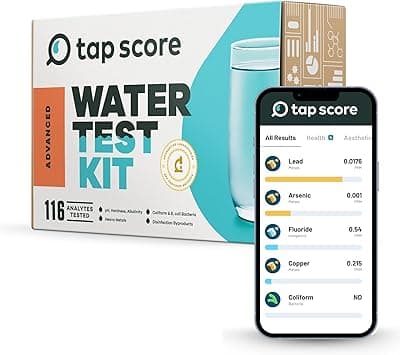
SimpleLab
Advanced Home Water Test
$269
Comprehensive water analysis testing over 200 contaminants including bacteria, heavy metals, and chemical compounds.
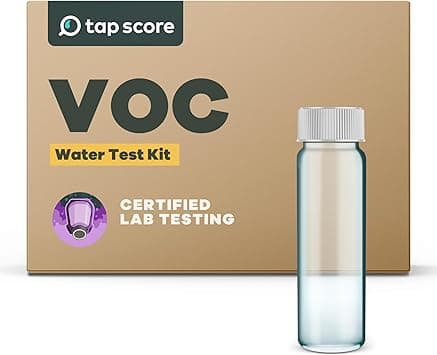
Tap Score
Volatile Organic Compounds (VOC) Test
$139
Detects volatile organic compounds including industrial solvents, fuels, and chemical contaminants.
SimpleLab
Coliform and E. coli Water Test
$99
The bacteria test a private well needs before closing and once a year after.
Find a Florida-certified lab
Get your well tested for Arsenic at a Florida-certified laboratory.
How to remove Arsenic: treatment options
Reverse osmosis (RO)
Point-of-use (single tap)Removes most dissolved arsenate, the As(V) form (and lead, fluoride, nitrate, and other dissolved contaminants), at a single tap.
Arsenite, the As(III) form, must first be oxidized to arsenate (As(V)) for reliable removal; very hard water can foul the membrane, so a softener upstream may help.
An under-sink reverse-osmosis unit typically runs about $450 and up (under-sink/countertop systems roughly $400–$1,350), plus periodic filter/membrane replacement. Costs vary widely.
Adsorption media (iron-based)
Point-of-use or whole-houseAdsorbs arsenic onto specialized media; available as a whole-house two-tank system or an under-sink cartridge.
Cartridge filters alone are not sufficient; where iron is also present, removing the iron often removes arsenic with it.
Whole-house (point-of-entry) systems are a larger investment — typically into the thousands of dollars installed — and total cost varies widely with water chemistry, system type, and professional installation.
Anion exchange
Whole-house (point-of-entry)A whole-house option that removes arsenate (As(V)) only, not arsenite (As(III)).
Costs are typical installed ranges that vary widely by system, water chemistry, region, and whether you install it yourself or hire a professional. Last reviewed 2026-06. Always confirm a device is certified (NSF/ANSI or WQA) for the specific contaminant.
Testing for Arsenic
- EPA maximum contaminant level (MCL)
- 0.010 mg/L (10 µg/L)The MCL goal (MCLG) is zero — there is no level considered risk-free.
- Can you taste, smell, or see it?
- None — arsenic is colorless, odorless, and tasteless. Only a certified-lab test detects it.
- Collecting a sample
- Use a state-certified drinking-water lab and collect the sample exactly as the kit directs. Re-test after installing any treatment to confirm it works.
Sources
The facts on this page are drawn from primary public-health and government sources:
By TapWaterData Editorial
Arsenic in Florida well water FAQ
How common is Arsenic in Florida private wells?
2 of 67 Florida counties with a modeled estimate (3.0%) are flagged as elevated-risk areas. These figures are USGS area estimates: statistical groundwater models describing how likely elevated contaminant levels are across a county. They are not designed to predict the concentration in any single well. Only testing your own well reveals its water quality.
Is Arsenic a health risk?
Arsenic is a health hazard, not an aesthetic one. Long-term exposure is linked to skin, bladder, and lung cancer and to cardiovascular effects. There is no taste or smell to warn you, which is exactly why the EPA sets a strict 10 µg/L limit.
How do I test my Florida well for Arsenic?
Order a test that covers Arsenic from a Florida-certified drinking-water lab and compare the result to the EPA limit. The county-level estimate above is an area model for Florida, not a measurement of your individual well — only testing your own water reveals its Arsenic level.
Need whole-house or professional water treatment?
For the problems a pitcher or under-sink filter cannot fix — scale, rust and black staining, sulfur smell, well contamination, or test results you cannot explain. Tell us what is happening and we will connect you with a local water-treatment professional.
Worried about Arsenic in your Florida well?
Get our plain-English guide to testing private-well water and reading the results.
Free forever. Unsubscribe anytime. We never share your email.
Stay Informed About Your Water Quality
Get EPA reports, filter recommendations, and safety alerts for your area.
Weekly water-quality guidance for your area. Unsubscribe anytime.