Lead in private well water
Lead in private wells almost always comes from corroding plumbing, solder, and brass fixtures rather than the groundwater itself. There is no national groundwater grid for it, so we show only the observed sampling context; the only way to know your level is a lab test at the tap.
Is it a health risk?
Lead is a health hazard with no safe level, especially for children and during pregnancy. Because it is plumbing-derived and invisible, testing the water at your own tap is the only reliable way to detect it.
What is Lead?
Lead is a toxic metal. In private wells it almost always comes from corroding plumbing — lead solder, brass fixtures, and older pipes — rather than from the groundwater itself.
Health effects of Lead
Lead is a health hazard with no safe level, and it is especially harmful to children and during pregnancy. Because it is plumbing-derived and invisible, testing the water at your own tap is the only reliable way to detect it.
Symptoms & signs
- Often none until levels are high
- In children: delays in development, reduced attention span and learning
- In adults: high blood pressure and kidney problems
Who is most at risk
- Infants and young children
- Pregnant women
How Lead gets into a well
Lead leaches from lead solder, brass fixtures, and older plumbing — especially when water sits in the pipes or the water is corrosive (low pH, low mineral content). It rarely originates in the aquifer.
How common is Lead in US private wells?
No national grid — observed context only
There is no national groundwater grid for Lead in private wells, so we do not show a national risk number for it. The only signal available is the observed sampling context from the EPA/USGS Water Quality Portal (59,083 reported samples across 2,088 counties in our current dataset), which is biased toward wells that were already sampled. The only way to know your level is to test your own well.
Prefer a Simpler Option?
Can't find a convenient local lab? Mail-in testing offers EPA-certified analysis without appointments or travel.
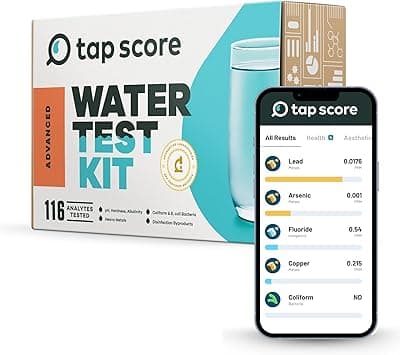
SimpleLab
Advanced Home Water Test
$269
Comprehensive water analysis testing over 200 contaminants including bacteria, heavy metals, and chemical compounds.
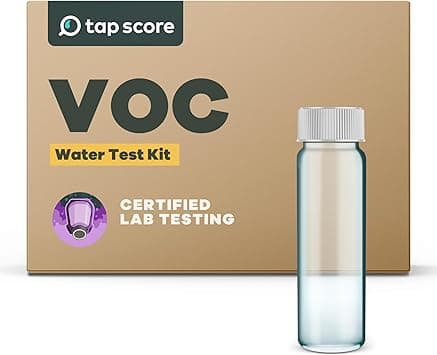
Tap Score
Volatile Organic Compounds (VOC) Test
$139
Detects volatile organic compounds including industrial solvents, fuels, and chemical contaminants.
SimpleLab
Coliform and E. coli Water Test
$99
The bacteria test a private well needs before closing and once a year after.
How to remove Lead: treatment options
Reverse osmosis or certified lead filter
Point-of-use (single tap)An RO unit or a filter certified for lead reduction removes lead at the drinking-water tap.
An under-sink reverse-osmosis unit typically runs about $450 and up (under-sink/countertop systems roughly $400–$1,350), plus periodic filter/membrane replacement. Costs vary widely.
Replace plumbing + flush
Point-of-use or whole-houseReplacing lead-bearing fixtures/solder removes the source; meanwhile, use cold water and flush the tap before drinking.
Corrosion-control (raising pH) can reduce leaching where replacement is not yet possible.
Costs are typical installed ranges that vary widely by system, water chemistry, region, and whether you install it yourself or hire a professional. Last reviewed 2026-06. Always confirm a device is certified (NSF/ANSI or WQA) for the specific contaminant.
Already have a well water test? Upload my well test
Testing for Lead
- EPA action level (treatment technique)
- 0.010 mg/LThe MCLG is zero. The 2024 Lead and Copper Rule Improvements lower the action level from 0.015 to 0.010 mg/L (public-system compliance begins 2027); 0.010 is the health-protective level to compare your result against.
- Can you taste, smell, or see it?
- None — lead is colorless, odorless, and tasteless; it must be tested at the tap.
- Collecting a sample
- Collect a first-draw sample (water that has sat in the pipes) at the tap, following the lab's instructions.
Sources
The facts on this page are drawn from primary public-health and government sources:
By TapWaterData Editorial
Lead in well water FAQ
Is Lead a health risk in private wells?
Lead is a health hazard with no safe level, especially for children and during pregnancy. Because it is plumbing-derived and invisible, testing the water at your own tap is the only reliable way to detect it.
How common is Lead in US private wells?
There is no national groundwater grid for Lead in private wells. We can only show the observed sampling context from the EPA/USGS Water Quality Portal (59,083 reported samples across 2,088 counties in our current dataset), which is biased toward already-sampled wells. The only way to know your level is to test your own well.
How do I find out if Lead is in my well?
Lead is not something you can see, taste, or smell your way to certainty about. Order a test that covers Lead from a state-certified drinking-water lab, collect the sample exactly as the kit instructs, and compare the result to the EPA limit. County-level area estimates describe a region as a whole and cannot stand in for testing your own well.
Need whole-house or professional water treatment?
For the problems a pitcher or under-sink filter cannot fix — scale, rust and black staining, sulfur smell, well contamination, or test results you cannot explain. Tell us what is happening and we will connect you with a local water-treatment professional.
Worried about Lead in your well?
Get our plain-English guide to testing private-well water and reading the results.
Free forever. Unsubscribe anytime. We never share your email.
Stay Informed About Your Water Quality
Get EPA reports, filter recommendations, and safety alerts for your area.
Weekly water-quality guidance for your area. Unsubscribe anytime.