Iron in private well water
Iron is one of the most common nuisance contaminants in private wells, leaching from soil and rock. There is no national groundwater grid for it, so we show only the observed sampling context for it; a test confirms the level in your own well.
Is it a health risk?
Iron at the levels that stain is primarily an aesthetic problem — orange/red stains and a metallic taste — and is generally considered safe to drink. It has a secondary (aesthetic) standard rather than a health-based limit.
What is Iron?
Iron is one of the most common nuisance metals in well water, dissolving from iron-bearing soil and rock. It is usually a taste-and-staining problem rather than a health problem.
Health effects of Iron
At the levels that cause staining, iron is primarily an aesthetic issue — orange/red stains and a metallic taste — and is generally considered safe to drink. It carries a secondary (aesthetic) standard rather than a health-based limit.
Symptoms & signs
- Orange, red, or brown staining of fixtures and laundry
- A metallic taste
- Rusty sediment in the water
How Iron gets into a well
Iron dissolves naturally from iron-bearing rock and soil. “Iron bacteria” in the well or plumbing can make the problem worse, producing a reddish slime.
How common is Iron in US private wells?
No national grid — observed context only
There is no national groundwater grid for Iron in private wells, so we do not show a national risk number for it. The only signal available is the observed sampling context from the EPA/USGS Water Quality Portal (361,948 reported samples across 2,862 counties in our current dataset), which is biased toward wells that were already sampled. The only way to know your level is to test your own well.
Prefer a Simpler Option?
Can't find a convenient local lab? Mail-in testing offers EPA-certified analysis without appointments or travel.
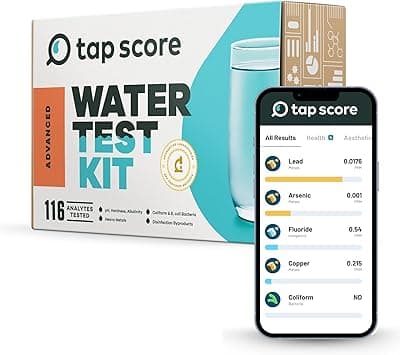
SimpleLab
Advanced Home Water Test
$269
Comprehensive water analysis testing over 200 contaminants including bacteria, heavy metals, and chemical compounds.
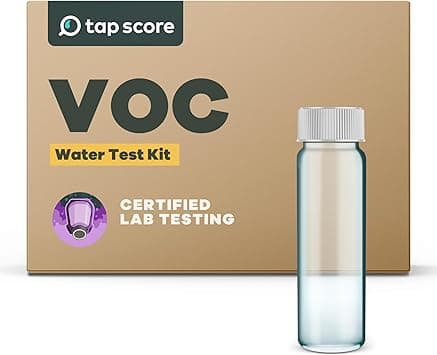
Tap Score
Volatile Organic Compounds (VOC) Test
$139
Detects volatile organic compounds including industrial solvents, fuels, and chemical contaminants.
SimpleLab
Coliform and E. coli Water Test
$99
The bacteria test a private well needs before closing and once a year after.
How to remove Iron: treatment options
Oxidation and filtration
Whole-house (point-of-entry)Oxidizes dissolved iron so it can be filtered out; treats the whole house.
Whole-house (point-of-entry) systems are a larger investment — typically into the thousands of dollars installed — and total cost varies widely with water chemistry, system type, and professional installation.
Water softener (cation exchange)
Whole-house (point-of-entry)Removes lower levels of dissolved iron along with hardness.
Whole-house (point-of-entry) systems are a larger investment — typically into the thousands of dollars installed — and total cost varies widely with water chemistry, system type, and professional installation.
Costs are typical installed ranges that vary widely by system, water chemistry, region, and whether you install it yourself or hire a professional. Last reviewed 2026-06. Always confirm a device is certified (NSF/ANSI or WQA) for the specific contaminant.
Already have a well water test? Upload my well test
Testing for Iron
- EPA secondary standard (SMCL)
- 0.3 mg/L (aesthetic)Iron has no health-based MCL.
- Can you taste, smell, or see it?
- Rusty/orange staining, sediment, and a metallic taste.
- Collecting a sample
- A certified lab can also report whether the iron is dissolved or particulate, which guides treatment.
Sources
The facts on this page are drawn from primary public-health and government sources:
By TapWaterData Editorial
Iron in well water FAQ
Is Iron a health risk in private wells?
Iron at the levels that stain is primarily an aesthetic problem — orange/red stains and a metallic taste — and is generally considered safe to drink. It has a secondary (aesthetic) standard rather than a health-based limit.
How common is Iron in US private wells?
There is no national groundwater grid for Iron in private wells. We can only show the observed sampling context from the EPA/USGS Water Quality Portal (361,948 reported samples across 2,862 counties in our current dataset), which is biased toward already-sampled wells. The only way to know your level is to test your own well.
How do I find out if Iron is in my well?
Iron is not something you can see, taste, or smell your way to certainty about. Order a test that covers Iron from a state-certified drinking-water lab, collect the sample exactly as the kit instructs, and compare the result to the EPA limit. County-level area estimates describe a region as a whole and cannot stand in for testing your own well.
Need whole-house or professional water treatment?
For the problems a pitcher or under-sink filter cannot fix — scale, rust and black staining, sulfur smell, well contamination, or test results you cannot explain. Tell us what is happening and we will connect you with a local water-treatment professional.
Worried about Iron in your well?
Get our plain-English guide to testing private-well water and reading the results.
Free forever. Unsubscribe anytime. We never share your email.
Stay Informed About Your Water Quality
Get EPA reports, filter recommendations, and safety alerts for your area.
Weekly water-quality guidance for your area. Unsubscribe anytime.