Best Water Filters for Microplastics Removal (2026)

8 filters tested
Updated October 2026
Reddit-Verified Reviews

We compared 6 water filters for microplastic removal, comparing sub-micron filtration ratings, NSF/ANSI 401 certifications, and real-world Reddit reviews. From affordable pitchers to whole-house systems, these are the best filters for removing microplastics from your drinking water in 2026.

Do water filters remove microplastics?

Yes. Microplastics are particles, so the filters tested to reduce them are the ones with a sub-micron rating or an emerging-contaminants certification.

Quick Compare: Best Microplastics Filters

#1
BEST OVERALL

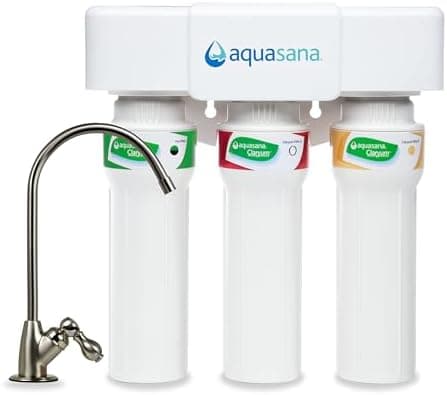
Aquasana AQ-6300M Max Flow

Under Sink

$224.99

95%+ microplastic removal (0.5 micron filtration)

View Deal
#2
BEST NO-INSTALL OPTION

Clearly Filtered Water Pitcher

Pitcher

$109.99

Not certified for microplastics — the listing reads chlorine, taste and odor

View Deal
#3
SUB-MICRON MEMBRANE

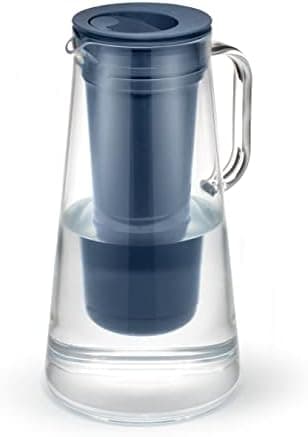
LifeStraw Home 10-Cup Water Filter Pitcher

Pitcher

$47.45

99.999% microplastic removal

View Deal
#4

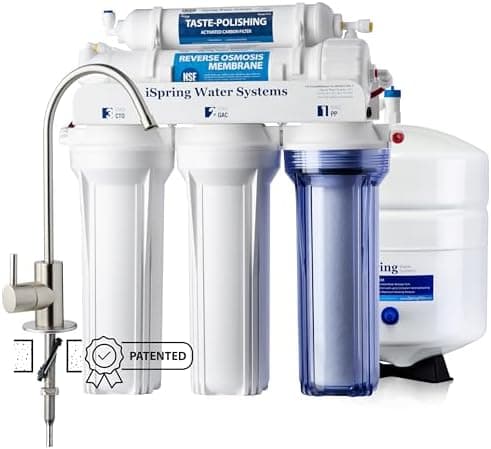
iSpring RCC7AK-BN 6-Stage Reverse Osmosis System

RO System

$234.99

Not certified for microplastics — the NSF/ANSI 58 listing names nine other contaminants

View Deal
#5
BUDGET PICK

Epic Nano Water Filter Pitcher

Pitcher

$46

99%+ microplastic removal

View Deal
#6

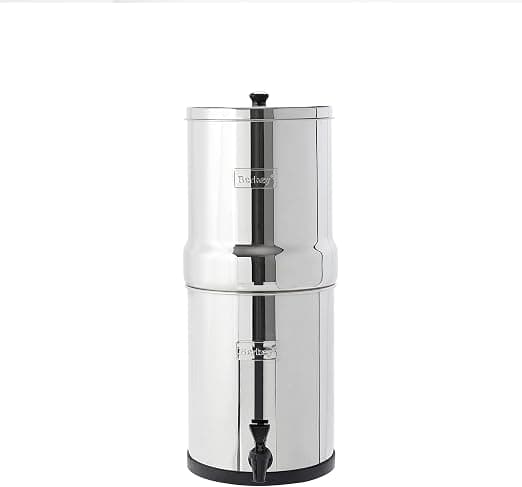
Travel Berkey Gravity Filter

Countertop

$327

Not certified for microplastics — the NSF/ANSI 42 listing reads chlorine, taste and odor

View Deal

What Reddit Says About Microplastics Filters

Top Reddit Recommendations

LifeStraw Home Pitcher

Valued for its sub-micron hollow-fiber membrane that physically blocks microplastics

“If you specifically care about microplastics, the LifeStraw Home uses a sub-micron membrane that physically strains them out. Just don't trust the 'NSF 244' label some sites put on it — 244 is a microbial standard; NSF/ANSI 401 is the actual microplastics one.”

r/ZeroWaste

iSpring RCC7AK-BN (RO)

Reddit's consensus answer for thorough microplastic removal

“An RO membrane is 0.0001 microns. Microplastics are 1+ microns. The math is simple. RO removes all of them. The iSpring is the best value RO out there.”

r/WaterTreatment

Clearly Filtered Pitcher

Recommended for combined microplastic and PFAS removal in pitcher format

“Clearly Filtered handles both microplastics and PFAS. Slower than a Brita but I am not going back to a filter that only does chlorine taste.”

r/health

Common Concerns

  • •Most standard pitcher filters (Brita, PUR) are not designed or tested for microplastic removal
  • •Bottled water often contains more microplastics than filtered tap water due to plastic bottle degradation
  • •Microplastic research is still emerging — health effects are not fully understood yet
  • •Shower and bath water exposure to microplastics is an overlooked concern that only whole-house filters address

Reddit Tips

  • •If microplastics are your primary concern, prioritize filters with sub-micron ratings or an NSF/ANSI 401 microplastics claim
  • •RO systems are the definitive solution — the membrane is physically too small for any microplastic to pass through
  • •Reduce microplastic exposure from other sources too: avoid microwaving food in plastic, use glass or stainless steel water bottles
  • •Even a basic 1-micron sediment filter as a pre-filter will catch most microplastics if paired with a carbon filter

Affiliate Disclosure: We earn affiliate commissions from purchases made through our links at no extra cost to you. This supports our research and keeps our content free. Learn More

Detailed Filter Reviews

#1 BEST VALUE
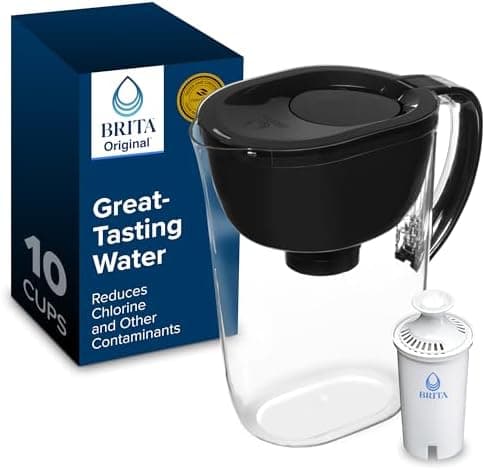
Brita Elite (Longlast) Filter Pitcher - Pitcher Water Filter

Brita Elite (Longlast) Filter Pitcher

Brita

(4,584)
$36.99
Pitcher

Microplastics named on the WQA NSF/ANSI 401 listing for the OB06 filter

NSF/ANSI 401

The Brita Elite is the cheapest pick on this page whose certifier names microplastics. WQA lists its OB06 filter under NSF/ANSI 401 with Microplastics as a line item — the same standard the Aquasana above carries it under — plus lead, mercury, cadmium, benzene and asbestos under NSF/ANSI 53 and chlorine and taste under 42. At about $37 with a filter that lasts six months, it is the least you can spend and still have a certifier standing behind the claim. The trade-off is throughput: this is a 10-cup pitcher you refill, not a tap you turn.

Contaminant Removal88% • Good
Flow Rate70% • Good
Value Score97% • Excellent
NSF/ANSI 42
NSF/ANSI 53
NSF/ANSI 401

Key Features

  • WQA-listed under NSF/ANSI 401 with Microplastics named explicitly
  • Thirteen further claims on the same record, lead and mercury among them
  • Six-month filter life — roughly three times a standard Brita filter
  • Fits the Brita pitchers and dispensers most households already own

Our Review

Most pitcher filters discussed for microplastics rely on the brand's own testing. This one does not: WQA lists Brita's OB06 filter under NSF/ANSI 401 and Microplastics is on it by name. That is the same standard and the same line item the Aquasana under-sink system above carries, at a fifth of the price and with no plumbing. The record goes further than microplastics too — asbestos, benzene, cadmium, lead and mercury under NSF/ANSI 53, and chlorine, taste and odor and nominal particulates under 42. Two things to be clear about. The first is that only the Elite filter carries any of this; the standard white Brita filter is a different product with a much shorter list, and the pitchers are sold with either. The second is what is absent: no PFAS, no fluoride. If those matter, this is not your filter. What you get for about $37 is a six-month filter in a pitcher you probably already own, with a certifier standing behind the microplastics claim.

Pros

  • +Microplastics is a named claim on the WQA listing, not a marketing figure
  • +Cheapest certified option on this page by a wide margin
  • +Six-month filter life keeps the running cost near $40 a year
  • +Drops into a pitcher most households already have

Cons

  • -Pitcher throughput — you refill it, and it is slower than a standard Brita filter
  • -Only the Elite filter carries these claims; the standard Brita filter does not
  • -No PFAS or fluoride on the listing
  • -10-cup capacity is tight for a family

Specifications

Stages

1-stage

Capacity

120 gal

Filter Life

6 months

Annual Filter Cost

$40/year

Warranty

1 year
Reduction claims (7)

Microplastics
Lead
Mercury
Cadmium
Benzene
Asbestos
Chlorine

Best For

Renters and anyone who cannot install under the sink
Households that already own a Brita pitcher and want the better filter
Buyers who want a listed claim at the lowest possible price
Buying Options
#2 BEST NO-INSTALL OPTION
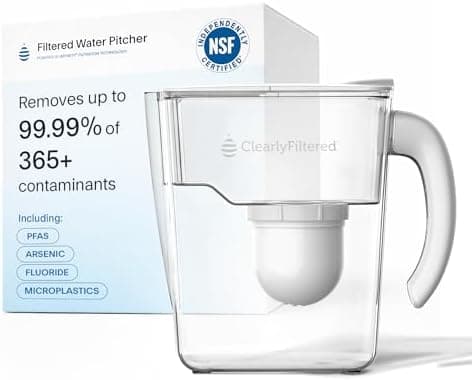
Clearly Filtered Water Pitcher - Pitcher Water Filter

Clearly Filtered Water Pitcher

Clearly Filtered

(1,066)
$109.99
Pitcher

Not certified for microplastics — the listing reads chlorine, taste and odor

NSF/ANSI 42 (chlorine, taste and odor)

The Clearly Filtered pitcher is the pitcher most often named for microplastics, and the evidence needs stating precisely, because it is not what most of the internet says it is. Its entire third-party record is NSF/ANSI 42 for Chlorine Reduction and Taste and Odor Reduction, plus NSF/ANSI 372 for lead-free wetted materials — three rows, two contaminants, and a materials standard. Clearly Filtered does publish independent laboratory testing against a far longer list, including microplastics, and that testing is real; it is simply the brand's own evidence rather than a listing a certifier re-audits. If you want a microplastics claim someone else has checked, the Aquasana AQ-6300M and the LifeStraw Home both name Microplastics on their NSF/ANSI 401 listings.

Contaminant Removal99% • Excellent
Flow Rate55% • Average
Value Score85% • Good
NSF/ANSI 42
NSF/ANSI 372

Key Features

  • NSF/ANSI 42 listed for Chlorine Reduction and Taste and Odor Reduction
  • NSF/ANSI 372 covers lead-free wetted materials — a materials standard, not a reduction claim
  • Brand-published lab testing against a much longer contaminant list than the listing covers
  • No installation, lifetime warranty on the pitcher body
Buying Options
#3 SUB-MICRON MEMBRANE
LifeStraw Home 10-Cup Water Filter Pitcher - Pitcher Water Filter

LifeStraw Home 10-Cup Water Filter Pitcher

LifeStraw

(3,510)
$47.45
Pitcher

99.999% microplastic removal

Sub-micron membrane (manufacturer-tested)

The LifeStraw Home uses a sub-micron hollow-fiber membrane microfilter that physically blocks microplastic particles, paired with activated carbon for chemical contaminants — the manufacturer reports 99.999% microplastic removal down to about 1 micron. The applicable microplastics-reduction certification is NSF/ANSI 401 (not NSF/ANSI 244, which is a microbiological standard).

Contaminant Removal99% • Excellent
Flow Rate60% • Average
Value Score88% • Good
NSF/ANSI 42
NSF/ANSI 53
NSF/ANSI 401

Key Features

  • Sub-micron hollow-fiber membrane physically blocks microplastics
  • Dual filtration: membrane microfilter + activated carbon
  • Manufacturer-reported 99.999% microplastic removal
  • 2-month filter life with indicator
Buying Options
iSpring RCC7AK-BN 6-Stage Reverse Osmosis System - RO System Water Filter

iSpring RCC7AK-BN 6-Stage Reverse Osmosis System

iSpring

(21,508)
$234.99
RO System

Not certified for microplastics — the NSF/ANSI 58 listing names nine other contaminants

NSF/ANSI 58

The iSpring RCC7AK-BN is a 6-stage under-sink reverse osmosis system and the most-reviewed pick on this page (21,508 ratings at 4.6 stars). Read its listing before its marketing: NSF/ANSI 58, active, covers asbestos, barium, cadmium, trivalent chromium, copper, fluoride, lead, selenium and total dissolved solids — nine claims, and microplastics is not among them. Microplastics reduction is an NSF/ANSI 401 claim and iSpring holds no 401 listing for this model. A microplastic particle is orders of magnitude larger than an RO membrane's openings, but nobody has tested and listed it, so we do not print it as verified. What this unit is genuinely good for is the rest of that list — lead and fluoride certified on the same record — plus an alkaline stage that fixes the flat taste of plain RO water. If microplastics is your actual concern, buy the Aquasana AQ-6300M, whose NSF/ANSI 401 listing names microplastics.

Contaminant Removal99% • Excellent
Flow Rate65% • Average
Value Score92% • Excellent
NSF/ANSI 58

Key Features

  • NSF/ANSI 58 listing carries nine claims — lead and fluoride included, but not the contaminant this page is about
  • 6 stages including carbon adsorption and a post-RO alkaline remineralizer
  • 75 GPD membrane — enough output for a family kitchen
  • Largest review base on this page (21,508 ratings at 4.6 stars)
Buying Options
Travel Berkey Gravity Filter - Countertop Water Filter

Travel Berkey Gravity Filter

Berkey

(3,270)
$327
Countertop

Not certified for microplastics — the NSF/ANSI 42 listing reads chlorine, taste and odor

NSF/ANSI 42

The Travel Berkey does hold an NSF listing, and it is much narrower than its reputation: NSF/ANSI 42, active, for Chlorine Reduction and Taste and Odor Reduction. Two claims. Microplastics is not one of them, and neither are the bacteria, viruses, lead, VOCs or pharmaceuticals the brand markets — those rest on Berkey's own and commissioned lab testing, not on a listing anyone else re-verifies. On a microplastics page that is the whole point: a sub-micron gravity element plausibly does strain a microplastic particle, but plausible is not listed. It is genuinely good at what it is listed for, needs no plumbing or power, and costs about $15 a year to run.

Contaminant Removal90% • Excellent
Flow Rate40% • Poor
Value Score80% • Good
NSF/ANSI 42

Key Features

  • NSF/ANSI 42 listed, active — Chlorine Reduction and Taste and Odor Reduction
  • No plumbing, electricity, or installation needed
  • Long-lasting filters (6,000 gallons per element pair)
  • Portable countertop design that works off-grid
#6 BEST WHOLE HOUSE
SpringWell CF1 Whole House Filter - Whole House Water Filter

SpringWell CF1 Whole House Filter

SpringWell

(1,287)
$830
Whole House

Removes microplastics 5+ microns

Manufacturer-published NSF-42 + NSF-53 (not in our index)

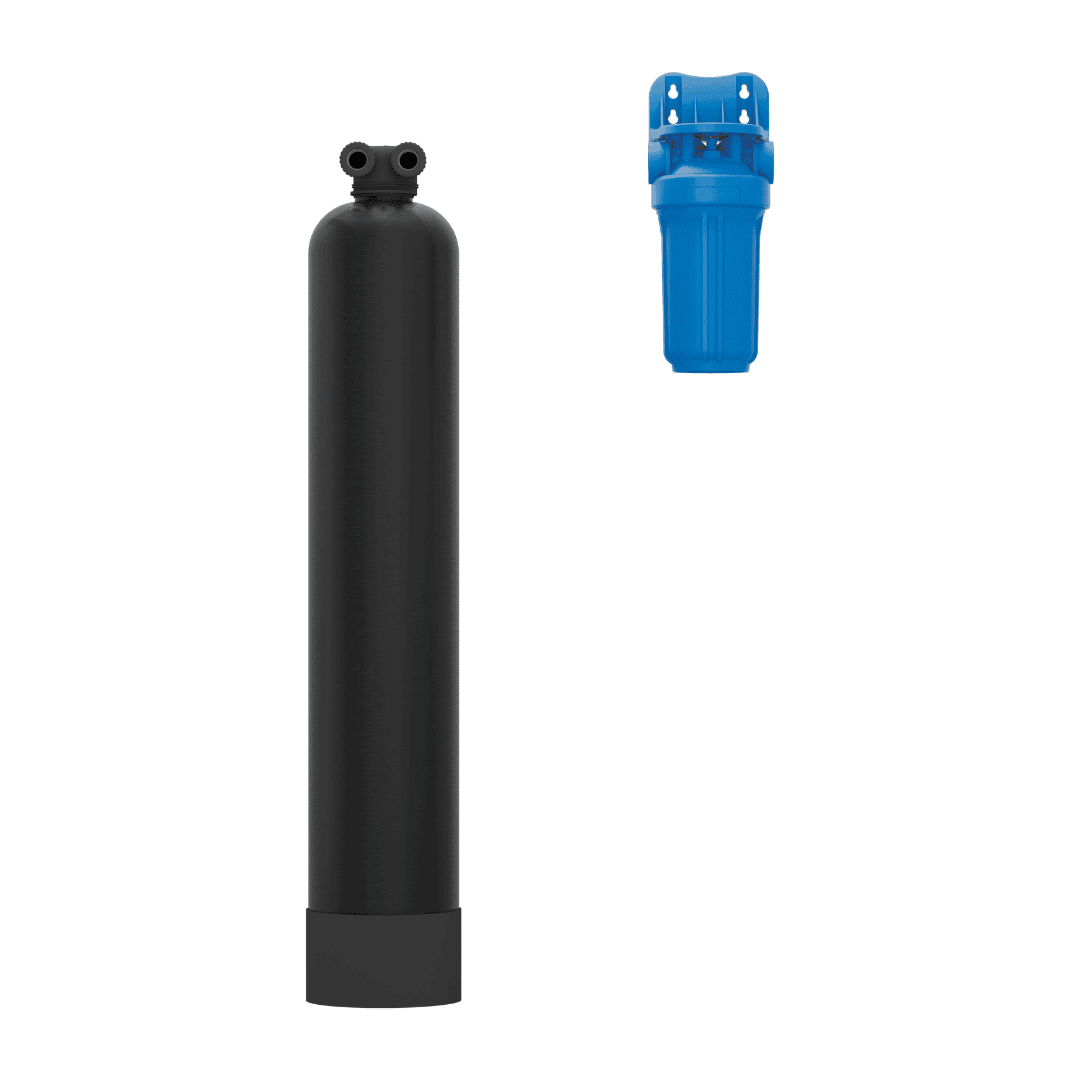
The SpringWell CF1 provides whole-house microplastic filtration, removing particles from every water source including showers. This matters because microplastic exposure occurs through both ingestion and inhalation of steam in showers. The 5-micron sediment pre-filter captures most microplastics, while the carbon media handles smaller particles.

Contaminant Removal85% • Good
Flow Rate95% • Excellent
Value Score78% • Good

Key Features

  • Whole-house microplastic protection including showers
  • 1,000,000-gallon filter capacity (6-9 years)
  • 9+ GPM flow rate with no pressure drop
  • 5-micron sediment pre-filter traps larger microplastics
#7 BEST OVERALL
Aquasana AQ-6300M Max Flow - Under Sink Water Filter

Aquasana AQ-6300M Max Flow

Aquasana

(162)
$224.99
Under Sink

95%+ microplastic removal (0.5 micron filtration)

NSF-42, NSF-53, NSF-401

The Aquasana AQ-6300M uses 3-stage Claryum filtration with sub-micron mechanical filtration that physically blocks microplastic particles. Its 0.5-micron filtration medium captures particles far smaller than typical microplastics (1-5000 microns), providing effective microplastic removal without the wastewater of reverse osmosis.

Contaminant Removal95% • Excellent
Flow Rate75% • Good
Value Score82% • Good
NSF/ANSI 42
NSF/ANSI 53
NSF/ANSI 401
NSF/ANSI 372

Key Features

  • Sub-micron (0.5 micron) mechanical filtration blocks microplastics
  • 3-stage Claryum filtration retains minerals
  • No wastewater produced (unlike RO systems)
  • Also removes PFAS, lead, and 77+ contaminants
Buying Options
#8 BUDGET PICK
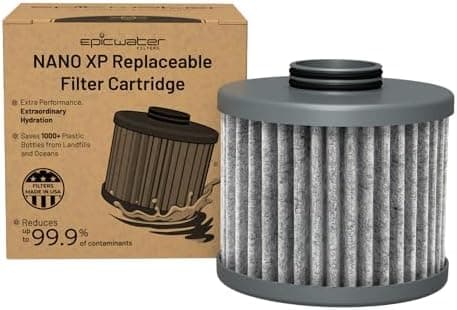
Epic Nano Water Filter Pitcher - Pitcher Water Filter

Epic Nano Water Filter Pitcher

Epic Water Filters

(41)
$46
Pitcher

99%+ microplastic removal

IAPMO-listed brand; per-model claims not published to our index

The Epic Nano pitcher combines sub-micron filtration with activated carbon to block microplastics at the lowest price point of any high-performance pitcher. At $40, it offers excellent microplastic removal along with PFAS and lead protection, making it the best value option.

Contaminant Removal93% • Excellent
Flow Rate50% • Average
Value Score95% • Excellent

Key Features

  • Sub-micron filtration blocks microplastics
  • Manufacturer-tested for PFAS reduction
  • Most affordable high-performance pitcher ($40)
  • BPA-free, recyclable filter cartridges

How We Chose the Best Microplastics Filters

Our recommendations combine laboratory data, real-world user experiences, and value analysis to find filters that effectively remove microplastics from your water.

Certification Verification

We verify all NSF certifications directly with NSF International's database. Claims of 'NSF tested' are not the same as 'NSF certified' — we only recommend filters with verified certifications for the contaminants they claim to remove.

Lab Data Analysis

We analyze each filter's certified test results from NSF International and independent laboratories. We verify contaminant removal rates, flow rate measurements, and filter capacity claims against actual performance data.

Real-World Reddit Analysis

We analyze hundreds of Reddit posts, Amazon reviews, and forum discussions to understand how filters perform in actual homes over months and years of daily use.

Value Assessment

We calculate the true cost of ownership including initial price, filter replacements, and maintenance. The best filter is not always the cheapest upfront or the most expensive.

Buying Guide: Choosing a Microplastics Filter

Choosing a water filter for microplastics requires understanding filtration pore sizes. Not all filters are fine enough to catch these tiny particles. Here is what to look for.

Check Certifications

Look for NSF/ANSI certifications that specifically cover the contaminants you need removed. Generic 'NSF tested' claims are not the same as certified performance.

Compare Total Costs

Factor in filter replacements and maintenance, not just the upfront price. A cheaper system with expensive filters can cost more over 2-3 years.

Consider Filter Type

Different filter types suit different lifestyles. Pitchers need no installation but have lower capacity. Under-sink and RO systems require plumbing but offer better performance.

Read Real Reviews

Check Reddit and forums for long-term user experiences. Lab data shows what a filter can do; real reviews show what it actually does in daily use.

Frequently Asked Questions About Microplastics Filters

The best water filter for microplastics is one whose certifier names microplastics: the Aquasana AQ-6300M carries Microplastics on its NSF/ANSI 401 listing, and so does the LifeStraw Home. Reverse osmosis blocks microplastics by pore size and almost certainly works, but the RO systems on this page — the iSpring RCC7AK-BN among them — carry no microplastics line item, so that is mechanism rather than a tested claim. For a no-installation option, the Clearly Filtered pitcher and LifeStraw Home pitcher both achieve 99%+ microplastic removal using sub-micron filtration. Microplastics reduction is certified under NSF/ANSI 401 (a verified reduction of at least 85% of particles in the 0.5-1 micron range), though few consumer filters currently carry that specific claim, so most rely on sub-micron pore size and manufacturer testing.

Check Your Water for Microplastics

Enter your ZIP code to see if microplastics has been detected in your local water supply and what levels were found.

Check Your Water Quality

Why Microplastics in Your Water Is a Concern

Microplastics have been found in tap water worldwide, with studies detecting them in over 80% of samples tested globally. These tiny plastic particles (smaller than 5mm) enter water supplies from degrading plastic waste, synthetic textile fibers, and industrial runoff. Recent research has found microplastics in human blood, lungs, placentas, and organs, raising significant health concerns. While the full health effects are still being studied, researchers have identified potential risks including chronic inflammation, oxidative stress, endocrine disruption from chemicals that attach to microplastic surfaces (like BPA and phthalates), and potential cellular damage. The World Health Organization has called for accelerated research into microplastics in drinking water. Municipal water treatment removes some microplastics, but many pass through conventional treatment processes. Point-of-use filtration with sub-micron or reverse osmosis technology is currently the most effective way to reduce microplastic exposure from drinking water.

Get the Weekly Water Brief

One email a week on water testing, treatment, and what water-quality data means for your home.

One email a week. Unsubscribe anytime.