Uranium in private well water
Uranium is a naturally occurring radioactive metal that leaches into groundwater from granite bedrock. It is common in New Hampshire's bedrock aquifers and, like arsenic, gives no taste, color, or smell in a private well.
Is it a health risk?
Uranium is a health hazard. Chronic exposure in drinking water is primarily a kidney-toxicity concern, and uranium is also radioactive. Only New Hampshire publishes a state-specific groundwater model; everywhere else, testing your own well is the only way to know.
What is Uranium?
Uranium is a naturally occurring radioactive metal that leaches into groundwater from uranium-bearing bedrock such as granite. In water it is colorless, odorless, and tasteless.
Health effects of Uranium
Uranium is a health hazard. Chronic exposure in drinking water is primarily a kidney-toxicity concern (a chemical effect), and uranium is also radioactive, carrying an increased long-term cancer risk.
Symptoms & signs
- Usually none until kidney effects develop
- Possible kidney damage with long-term high exposure
Who is most at risk
- People with existing kidney conditions
- Anyone with long-term high-level exposure
Uranium's toxicity is mainly a chemical (kidney) effect from chronic ingestion, alongside a long-term radiation-related cancer risk; there is no acute illness at typical well-water levels.
How Uranium gets into a well
Uranium dissolves from granite and alkaline sandstone aquifers; its mobility in groundwater increases with dissolved oxygen and carbonate alkalinity.
Where Uranium is common
Uranium occurs in groundwater nationwide wherever bedrock is uranium-rich — notably the granite areas of New England, the Rocky Mountains, and Western basin-fill aquifers. Only New Hampshire publishes a modeled probability surface for private-well uranium; everywhere else, the only way to know your level is to test your own well.
How common is Uranium in US private wells?
No national grid — New Hampshire-only model
There is no national groundwater model for Uranium in private wells. A state-specific model exists only for New Hampshire (covering 10 counties there). Everywhere else, the only way to know your level is to test your own well.
These figures are USGS area estimates: statistical groundwater models describing how likely elevated contaminant levels are across a county. They are not designed to predict the concentration in any single well. Only testing your own well reveals its water quality.
Uranium risk by state
States with a modeled Uranium estimate for private wells, highest area-risk first. Each links to the county-level detail.
Prefer a Simpler Option?
Can't find a convenient local lab? Mail-in testing offers EPA-certified analysis without appointments or travel.
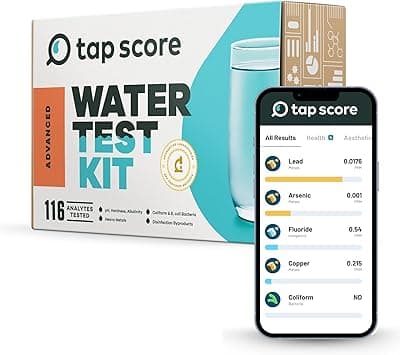
SimpleLab
Advanced Home Water Test
$269
Comprehensive water analysis testing over 200 contaminants including bacteria, heavy metals, and chemical compounds.
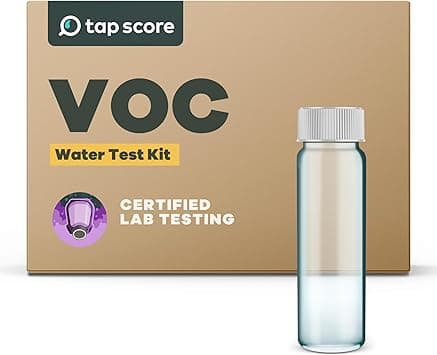
Tap Score
Volatile Organic Compounds (VOC) Test
$139
Detects volatile organic compounds including industrial solvents, fuels, and chemical contaminants.
SimpleLab
Coliform and E. coli Water Test
$99
The bacteria test a private well needs before closing and once a year after.
How to remove Uranium: treatment options
Anion exchange
Whole-house (point-of-entry)A whole-house option that removes uranium from all water entering the home.
Spent resin can concentrate uranium and become low-level radioactive waste — handle and dispose of it per local guidance.
Whole-house (point-of-entry) systems are a larger investment — typically into the thousands of dollars installed — and total cost varies widely with water chemistry, system type, and professional installation.
Reverse osmosis (RO)
Point-of-use (single tap)Removes uranium at a single tap (drinking/cooking water).
The RO reject water and membrane can concentrate uranium.
An under-sink reverse-osmosis unit typically runs about $450 and up (under-sink/countertop systems roughly $400–$1,350), plus periodic filter/membrane replacement. Costs vary widely.
Costs are typical installed ranges that vary widely by system, water chemistry, region, and whether you install it yourself or hire a professional. Last reviewed 2026-06. Always confirm a device is certified (NSF/ANSI or WQA) for the specific contaminant.
Already have a well water test? Upload my well test
Testing for Uranium
- EPA maximum contaminant level (MCL)
- 30 µg/LThe MCLG is zero. A gross-alpha screen (MCL 15 pCi/L) is a common, inexpensive first step before a uranium-specific test.
- Can you taste, smell, or see it?
- None — colorless, odorless, and tasteless.
- Collecting a sample
- Use a certified lab; a gross-alpha screen can flag whether a uranium-specific test is needed.
Sources
The facts on this page are drawn from primary public-health and government sources:
By TapWaterData Editorial
Uranium in well water FAQ
Is Uranium a health risk in private wells?
Uranium is a health hazard. Chronic exposure in drinking water is primarily a kidney-toxicity concern, and uranium is also radioactive. Only New Hampshire publishes a state-specific groundwater model; everywhere else, testing your own well is the only way to know.
How common is Uranium in US private wells?
There is no national groundwater grid for Uranium in private wells. A state-specific model exists only for New Hampshire; everywhere else, the only way to know your level is to test your own well.
How do I find out if Uranium is in my well?
Uranium is not something you can see, taste, or smell your way to certainty about. Order a test that covers Uranium from a state-certified drinking-water lab, collect the sample exactly as the kit instructs, and compare the result to the EPA limit. County-level area estimates describe a region as a whole and cannot stand in for testing your own well.
Need whole-house or professional water treatment?
For the problems a pitcher or under-sink filter cannot fix — scale, rust and black staining, sulfur smell, well contamination, or test results you cannot explain. Tell us what is happening and we will connect you with a local water-treatment professional.
Worried about Uranium in your well?
Get our plain-English guide to testing private-well water and reading the results.
Free forever. Unsubscribe anytime. We never share your email.
Stay Informed About Your Water Quality
Get EPA reports, filter recommendations, and safety alerts for your area.
Weekly water-quality guidance for your area. Unsubscribe anytime.