PFAS in private well water
PFAS (“forever chemicals”) come from industrial sites, firefighting foam, and landfills. There is no national groundwater model for private wells, so what we show is a PROXY: PFAS detections in nearby public water systems and the distance to the nearest known PFAS-handling facility.
Is it a health risk?
PFAS are a health hazard, linked to immune, developmental, and cancer effects, and the EPA's limits are extremely low. Public-system detections near a private well are a regional warning sign, not a measurement of your water — only a lab test of your own well reveals its PFAS level.
What is PFAS?
PFAS (per- and polyfluoroalkyl substances, the “forever chemicals”) are a large class of synthetic compounds — including PFOA, PFOS, and GenX (HFPO-DA) — built around strong carbon-fluorine bonds that resist breakdown, so they persist in the environment and in the body.
Health effects of PFAS
PFAS are a health hazard at very low levels — linked to cardiovascular, immune, liver, and thyroid effects, developmental effects during pregnancy and childhood, and certain cancers. The EPA's 2024 limits are among the lowest set for any drinking-water contaminant.
Symptoms & signs
- No direct symptoms — effects are identified through long-term studies, not day-to-day signs
Who is most at risk
- Pregnant women and developing children
- Anyone with long-term exposure
How PFAS gets into a well
PFAS reach groundwater from industrial discharges, firefighting foam (AFFF) used at airports and military sites, landfills, and land-applied biosolids. Once in groundwater they are highly mobile and extremely persistent.
Where PFAS is common
PFAS risk is highest near manufacturing sites, military and airport firefighting-training areas, and some landfills. Because there is no national groundwater model for PFAS in private wells, this site shows only a PROXY — detections in nearby public water systems and proximity to known PFAS sources — never a measurement of your own well.
How common is PFAS in US private wells?
No national grid — public-system proxy only
There is no national groundwater model for PFAS in private wells. What exists is a proxy from public water systems and nearby facilities — a regional warning sign, not a measurement of any private well. Public water systems in 1,163 of the counties in our dataset reported a PFAS detection (3,386 of 9,823 systems tested across 2,423 counties) — a regional signal, not a measurement of any private well. Only a lab test of your own water reveals its PFAS level.
Prefer a Simpler Option?
Can't find a convenient local lab? Mail-in testing offers EPA-certified analysis without appointments or travel.
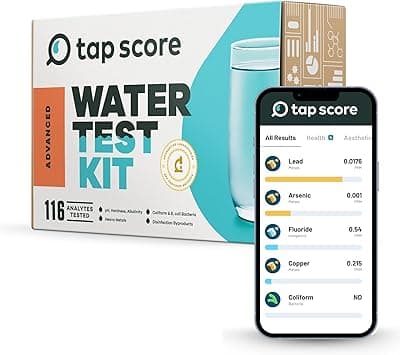
SimpleLab
Advanced Home Water Test
$269
Comprehensive water analysis testing over 200 contaminants including bacteria, heavy metals, and chemical compounds.
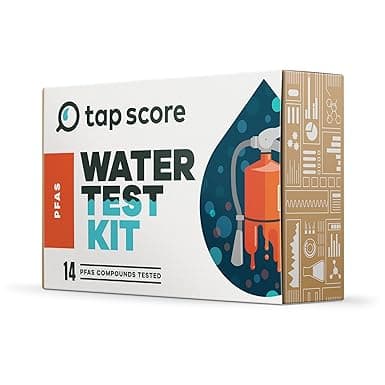
Tap Score
PFAS Forever Chemicals Test
$339.95
Specialized test for PFOA, PFOS, and 24 other forever chemicals. Essential for areas near military bases, airports, or industrial sites.
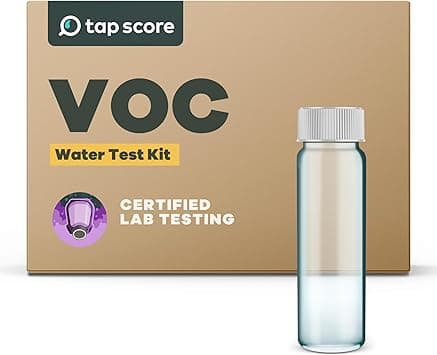
Tap Score
Volatile Organic Compounds (VOC) Test
$139
Detects volatile organic compounds including industrial solvents, fuels, and chemical contaminants.
How to remove PFAS: treatment options
Granular activated carbon (GAC)
Point-of-use or whole-houseAdsorbs PFOA/PFOS and many other PFAS; available as point-of-use or whole-house.
Choose a device certified to NSF/ANSI standards for PFOA/PFOS reduction; replace media on schedule.
A pour-through pitcher or faucet filter typically runs about $25–$75 ($15–$45 per replacement filter). Costs vary widely.
Reverse osmosis (RO)
Point-of-use (single tap)Removes a broad range of PFAS at a single tap.
An under-sink reverse-osmosis unit typically runs about $450 and up (under-sink/countertop systems roughly $400–$1,350), plus periodic filter/membrane replacement. Costs vary widely.
Ion exchange
Point-of-use or whole-houseAnion-exchange resin designed for PFAS can reduce PFOA/PFOS.
Costs are typical installed ranges that vary widely by system, water chemistry, region, and whether you install it yourself or hire a professional. Last reviewed 2026-06. Always confirm a device is certified (NSF/ANSI or WQA) for the specific contaminant.
Already have a well water test? Upload my well test
Testing for PFAS
- EPA maximum contaminant levels (2024)
- PFOA and PFOS: 4.0 ppt (0.004 µg/L); PFHxS, PFNA, and GenX: 10 ppt each; plus a Hazard Index for mixturesThese enforceable limits apply to public water systems; private wells are not federally regulated, but the limits are the best yardstick for a well result.
- Can you taste, smell, or see it?
- None — PFAS are odorless and tasteless; only a specialized lab test detects them.
- Collecting a sample
- PFAS testing needs a lab that runs low-level PFAS methods and special sampling to avoid cross-contamination.
Sources
The facts on this page are drawn from primary public-health and government sources:
By TapWaterData Editorial
PFAS in well water FAQ
Is PFAS a health risk in private wells?
PFAS are a health hazard, linked to immune, developmental, and cancer effects, and the EPA's limits are extremely low. Public-system detections near a private well are a regional warning sign, not a measurement of your water — only a lab test of your own well reveals its PFAS level.
How common is PFAS in US private wells?
There is no national groundwater model for PFAS in private wells. What is available is a proxy from public water systems and nearby facilities, which is a regional warning sign — not a measurement of any private well. Public water systems in 1,163 of the counties in our dataset reported a PFAS detection (3,386 of 9,823 systems tested across 2,423 counties) — a regional signal, NOT a measurement of any private well. Only a lab test of your own water reveals its PFAS level.
How do I find out if PFAS is in my well?
PFAS is not something you can see, taste, or smell your way to certainty about. Order a test that covers PFAS from a state-certified drinking-water lab, collect the sample exactly as the kit instructs, and compare the result to the EPA limit. County-level area estimates describe a region as a whole and cannot stand in for testing your own well.
Need whole-house or professional water treatment?
For the problems a pitcher or under-sink filter cannot fix — scale, rust and black staining, sulfur smell, well contamination, or test results you cannot explain. Tell us what is happening and we will connect you with a local water-treatment professional.
Worried about PFAS in your well?
Get our plain-English guide to testing private-well water and reading the results.
Free forever. Unsubscribe anytime. We never share your email.
Stay Informed About Your Water Quality
Get EPA reports, filter recommendations, and safety alerts for your area.
Weekly water-quality guidance for your area. Unsubscribe anytime.