Radon in New Hampshire well water
USGS area-risk estimates for Radon in New Hampshire private wells, by county. Radon is a health hazard. Inhaling radon released from water is a lung-cancer risk, and there is no national groundwater grid for it — New Hampshire is the only state with a published model. A water radon test, paired with an air test, is the only way to measure your own exposure.
How common is Radon in New Hampshire?
New Hampshire has a modeled Radon estimate for 10 counties, with a county-area average of 31%.
These figures are USGS area estimates: statistical groundwater models describing how likely elevated contaminant levels are across a county. They are not designed to predict the concentration in any single well. Only testing your own well reveals its water quality.
What is Radon?
Radon is a colorless, odorless radioactive gas produced by the decay of uranium and radium in bedrock. It dissolves into well water and is released into the air when water is agitated — showering, washing dishes, or doing laundry.
Health effects of Radon
Radon is a health hazard. Inhaling radon released from water (and from soil gas) is a lung-cancer risk; swallowing radon in water carries a smaller internal-organ cancer risk. Most household radon comes from soil gas, with well water a secondary contributor.
Symptoms & signs
- No immediate symptoms
- Long-term risk is lung cancer from inhaled radon
Who is most at risk
- Smokers (radon multiplies their lung-cancer risk)
- Households with high indoor-air radon
Radon's risk is entirely long-term (cancer) — there is no acute illness from radon in water.
How Radon gets into a well
Radon forms continuously from uranium and radium in the surrounding rock and dissolves into groundwater. No well construction method prevents it; it comes from the geology the well draws from.
Where Radon is common
Radon in well water is highest where bedrock is uranium-rich granite or shale — New England (notably New Hampshire and Maine), the Rocky Mountains, and parts of the Appalachians. Only New Hampshire publishes a modeled surface for private-well radon; everywhere else, test your own well.
Highest Radon risk counties in New Hampshire
Counties with the highest modeled Radon area-risk in New Hampshire. These are county-area estimates, not a measurement of any single well.
Prefer a Simpler Option?
Can't find a convenient local lab? Mail-in testing offers EPA-certified analysis without appointments or travel.
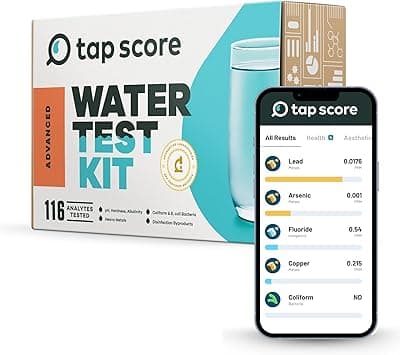
SimpleLab
Advanced Home Water Test
$269
Comprehensive water analysis testing over 200 contaminants including bacteria, heavy metals, and chemical compounds.
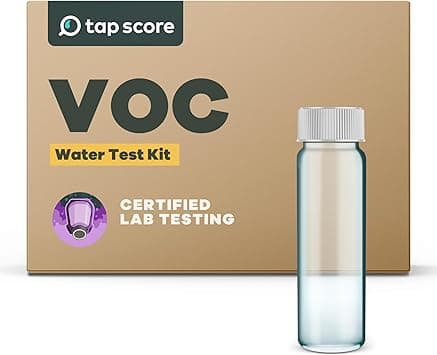
Tap Score
Volatile Organic Compounds (VOC) Test
$139
Detects volatile organic compounds including industrial solvents, fuels, and chemical contaminants.
SimpleLab
Coliform and E. coli Water Test
$99
The bacteria test a private well needs before closing and once a year after.
Find a New Hampshire-certified lab
Get your well tested for Radon at a New Hampshire-certified laboratory.
How to remove Radon: treatment options
Aeration (point-of-entry)
Whole-house (point-of-entry)Physically strips the radon gas out of the water by bubbling or spraying air through it; treats all water in the home and adds no chemicals or radioactive waste.
Higher upfront cost than carbon, but low operating cost and no waste-disposal issue.
Whole-house (point-of-entry) systems are a larger investment — typically into the thousands of dollars installed — and total cost varies widely with water chemistry, system type, and professional installation.
Granular activated carbon (GAC)
Whole-house (point-of-entry)Adsorbs radon as water passes through a whole-house carbon tank.
Radon accumulates on the carbon and the unit can itself become radioactive — siting and eventual disposal need care.
Costs are typical installed ranges that vary widely by system, water chemistry, region, and whether you install it yourself or hire a professional. Last reviewed 2026-06. Always confirm a device is certified (NSF/ANSI or WQA) for the specific contaminant.
Testing for Radon
- EPA proposed standard (never finalized)
- proposed MCL 300 pCi/L; alternative MCL (AMCL) 4,000 pCi/L with a multimedia mitigation programEPA proposed these limits in 1999 but has never finalized a radon-in-drinking-water rule, so there is no enforceable federal standard.
- Can you taste, smell, or see it?
- None — radon is colorless and odorless.
- Collecting a sample
- Radon needs special sample vials and a certified lab; pair a water-radon test with an indoor-air radon test, since soil gas is usually the larger source.
Sources
The facts on this page are drawn from primary public-health and government sources:
By TapWaterData Editorial
Radon in New Hampshire well water FAQ
How common is Radon in New Hampshire private wells?
New Hampshire has a modeled Radon estimate for 10 counties. These figures are USGS area estimates: statistical groundwater models describing how likely elevated contaminant levels are across a county. They are not designed to predict the concentration in any single well. Only testing your own well reveals its water quality.
Is Radon a health risk?
Radon is a health hazard. Inhaling radon released from water is a lung-cancer risk, and there is no national groundwater grid for it — New Hampshire is the only state with a published model. A water radon test, paired with an air test, is the only way to measure your own exposure.
How do I test my New Hampshire well for Radon?
Order a test that covers Radon from a New Hampshire-certified drinking-water lab and compare the result to the EPA limit. The county-level estimate above is an area model for New Hampshire, not a measurement of your individual well — only testing your own water reveals its Radon level.
Need whole-house or professional water treatment?
For the problems a pitcher or under-sink filter cannot fix — scale, rust and black staining, sulfur smell, well contamination, or test results you cannot explain. Tell us what is happening and we will connect you with a local water-treatment professional.
Worried about Radon in your New Hampshire well?
Get our plain-English guide to testing private-well water and reading the results.
Free forever. Unsubscribe anytime. We never share your email.
Stay Informed About Your Water Quality
Get EPA reports, filter recommendations, and safety alerts for your area.
Weekly water-quality guidance for your area. Unsubscribe anytime.