Bromodichloromethane
Bromodichloromethane (BDCM) is one of the four trihalomethanes regulated as part of TTHM (limit 80 ppb). It forms when source water contains bromide. Its EPA health goal (MCLG) is zero.
EPA MCLG
0 mg/L
EPA's health goal is zero — no known safe level of exposure. This is a goal, not an enforceable limit.
Health Effects
Carries the strongest bladder-cancer signal among the trihalomethanes in dose-response studies and is classified a probable human carcinogen. The risk is chronic and lifetime, not acute.
Common Sources
- Byproduct of disinfecting drinking water with chlorine
- Formed when chlorine reacts with natural organic matter such as decaying leaves, runoff, and algae
- Elevated when the source water contains naturally occurring bromide
Is your Bromodichloromethane result safe? Get a free reading
The EPA MCLG for Bromodichloromethane is 0 mg/L. Upload your water test (PDF or a photo) and we'll email a plain-English reading of where your result lands — and every other number — free. Educational only, no medical claims.
Your upload also helps us keep local water data accurate — we only ever share anonymized, area-level summaries.
Upload my testHow to Remove Bromodichloromethane
How do I get rid of Bromodichloromethane in drinking water?
For Bromodichloromethane, the verified treatment is activated carbon. Activated carbon is a conditional treatment. Requires an NSF/ANSI 53 TTHM-certified carbon and adequate contact time; carbon adsorbs TTHM but breaks through over time. EPA's municipal BAT is GAC10/GAC20 with enhanced coagulation or softening.
Source: NSF/ANSI 53 (TTHM reduction) / EPA Stage 1 & 2 D/DBP Rule, 40 CFR 141.64
What filter certification covers Bromodichloromethane?
Activated carbon is certified under NSF/ANSI 53. Check that the certification listing names Bromodichloromethane or its group: a certification to a standard is not a certification for every contaminant in it.
Source: NSF/ANSI 53 (TTHM reduction) / EPA Stage 1 & 2 D/DBP Rule, 40 CFR 141.64
Does a basic water filter pitcher remove Bromodichloromethane?
Only if it is certified for it. A basic pitcher is an activated-carbon device and carbon does adsorb Bromodichloromethane, but only a pitcher certified under NSF/ANSI 53 for this reduction has been tested to do it, and the cartridge breaks through as it loads — so replacement on schedule is part of the answer. An NSF/ANSI 42 certification, which most pitchers carry, covers taste and odor only and says nothing about Bromodichloromethane.
Source: NSF/ANSI 53 (TTHM reduction) / EPA Stage 1 & 2 D/DBP Rule, 40 CFR 141.64
Does boiling water remove Bromodichloromethane?
Mostly, from the water you drink — and this is the half of the disinfection-byproduct group where that is true. Trihalomethanes are volatile, so heating drives Bromodichloromethane out of the water rather than destroying it: EPA measured volatilization losses approaching 75% when water was boiled even for brief periods, and 90% when the boiled water was poured and served. It leaves as vapour into the room, which is why the cited EPA work is about ingestion exposure — it lowers what you swallow, not what the household breathes. Open containers lost more than closed ones, because a lid traps the vapour. None of this is advice to boil your water: boiling does nothing for the non-volatile half of this group and can raise haloacetic acids where residual chlorine is present, so it is no treatment for disinfection byproducts as a group.
We name no filter for Bromodichloromethane. The certifiers' listings carry no reviewed claim under this name, so no product can be shown to have been tested against it — and a claim we cannot check is a claim we will not publish. Use the certification above and read the listing for Bromodichloromethane itself.
Get Bromodichloromethane Updates
Research updates, regulation changes, and filter recommendations — in your inbox.
Free forever. Unsubscribe anytime. We never share your email.
Is Bromodichloromethane in your water?
Bromodichloromethane has been recorded above its health guideline in 8,006 cities, serving 165.7M people. Each system below was judged against a goal of 0 PPB.
Most affected systems, by population served
- New York, NY8,271,000 people served4.1 PPBgoal 0 PPB
- Los Angeles, CA3,868,811 people served2.88 PPBgoal 0 PPB
- Miami, FL2,300,000 people served2.26 PPBgoal 0 PPB
- Houston, TX2,202,531 people served6.2 PPBgoal 0 PPB
- Sandy Oaks, TX1,999,472 people served2 PPBgoal 0 PPB
- Windcrest, TX1,999,472 people served2 PPBgoal 0 PPB
- Hollywood Park, TX1,999,472 people served2 PPBgoal 0 PPB
- Castle Hills, TX1,999,472 people served2 PPBgoal 0 PPB
- Grey Forest, TX1,999,472 people served2 PPBgoal 0 PPB
- China Grove, TX1,999,472 people served2 PPBgoal 0 PPB
and 7,996 more cities with a recorded result above the guideline
These are the largest systems that reported a result above the guideline — not the highest results. A city missing from this list has not been shown to be clean: it may have no Bromodichloromethane result on file at all. We publish a level only where a system reported one.
Check your city or ZIP code for Bromodichloromethane
Part of a group: disinfection byproducts
This contaminant is rarely measured on its own. Disinfection byproducts in drinking water covers the whole group — what they are, which limits are enforceable, and where they come from.
Others in this group
About the EPA MCLG
The EPA MCLG is the level of a contaminant in drinking water below which there is no known or expected risk to health. It is a non-enforceable public health goal, and is often stricter than the legal limit (MCL) water systems must meet.
Contaminant Type
Bromodichloromethane is classified as a Disinfection Byproducts contaminant.
Related Disinfection Byproducts Contaminants
Check Your Water
Find out if Bromodichloromethane is in your tap water.
Search cities for Bromodichloromethane dataTest Your Water for This Contaminant
Public water reports may not test frequently enough or at your specific tap. Professional home testing provides current, location-specific results.
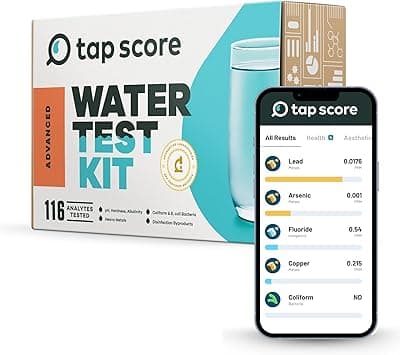
SimpleLab
Advanced Home Water Test
$269
Comprehensive water analysis testing over 200 contaminants including bacteria, heavy metals, and chemical compounds.
Tap Score
Advanced Microplastics Test
$829
Cutting-edge testing for microplastics particles in drinking water using advanced laboratory techniques.
Tap Score
Haloacetic Acids (HAA9) Test
$275
Tests for disinfection byproducts formed when chlorine reacts with organic matter in water treatment.
Get the Weekly Water Brief
One email a week on water testing, treatment, and what water-quality data means for your home.
One email a week. Unsubscribe anytime.