Why does my well water taste salty?
What causes this
Road salt or saltwater intrusion
Elevated chloride and sodium can come from road-salt runoff infiltrating the groundwater, or, in coastal areas, from saltwater intruding into the aquifer.
Water-softener discharge or geology
A water softener discharging into the well's area, or naturally salty geology, can also raise sodium and chloride enough to taste.
Is it dangerous?
A salty taste is primarily an aesthetic signal of elevated chloride and sodium, but it is worth testing rather than assuming: high sodium can matter for people on sodium-restricted diets, and rising chloride from saltwater intrusion is a sign the source is changing. So test to learn the cause rather than treat the taste as merely cosmetic.
The test that tells you
A symptom only narrows it down. To know for sure, have a state-certified lab test for:
- chloride
- sodium
- total dissolved solids
Already have a well water test? Upload my well test
Prefer a Simpler Option?
Can't find a convenient local lab? Mail-in testing offers EPA-certified analysis without appointments or travel.
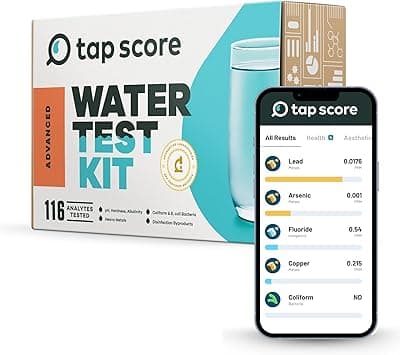
SimpleLab
Advanced Home Water Test
$269
Comprehensive water analysis testing over 200 contaminants including bacteria, heavy metals, and chemical compounds.
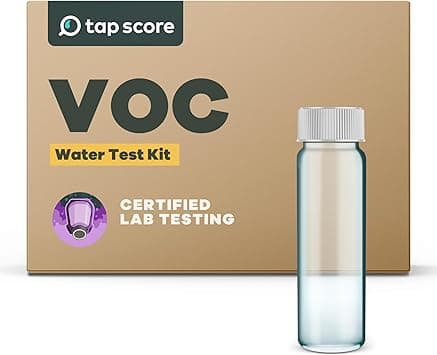
Tap Score
Volatile Organic Compounds (VOC) Test
$139
Detects volatile organic compounds including industrial solvents, fuels, and chemical contaminants.
SimpleLab
Coliform and E. coli Water Test
$99
The bacteria test a private well needs before closing and once a year after.
How to fix it
Reverse osmosis at the kitchen tap removes the dissolved salts that cause the taste in drinking water. If a water softener is the source, check and repair it so it is not over-discharging. If the cause is saltwater intrusion, evaluating the well's depth and source — sometimes with a professional — addresses the underlying problem.
- 1
Test for chloride, sodium, and TDS
Have a certified lab measure chloride, sodium, and total dissolved solids so you know how salty the water is and have a baseline to track change over time.
- 2
Identify the source
Consider whether road salt, coastal saltwater intrusion, a water softener, or natural geology is the likely cause — the source determines the right fix.
- 3
Filter drinking water with reverse osmosis
Install reverse osmosis at the kitchen tap to remove the dissolved salts from the water you drink and cook with.
- 4
Address the source
If a softener is over-discharging, repair it; if saltwater intrusion is the cause, evaluate the well's depth and source, sometimes with a professional, to address the underlying problem.
A symptom is a clue, not a diagnosis. Only a lab test of your individual well confirms what is in your water — do not assume a symptom is definitely harmless or definitely dangerous until you have tested. The county-level USGS area estimates elsewhere on this site describe a region as a whole and cannot stand in for testing your own well.
By TapWaterData Editorial
Frequently asked questions
Why does my well water taste salty?
A salty taste points to elevated chloride and sodium, which can come from road-salt runoff, coastal saltwater intrusion into the aquifer, water-softener discharge, or naturally salty geology. Testing for chloride, sodium, and total dissolved solids identifies how salty the water is and helps point to the cause.
Is salty well water safe to drink?
A salty taste is mainly an aesthetic signal, but it is worth testing rather than assuming. High sodium can matter for people on sodium-restricted diets, and rising chloride from saltwater intrusion indicates the source is changing — so test to learn the cause instead of treating the taste as merely cosmetic.
How do I remove salt from well water?
Reverse osmosis at the kitchen tap removes the dissolved salts that cause the salty taste in drinking water. If a water softener is over-discharging, repair it; if saltwater intrusion is the cause, evaluate the well's depth and source, sometimes with a professional.
Need whole-house or professional water treatment?
For the problems a pitcher or under-sink filter cannot fix — scale, rust and black staining, sulfur smell, well contamination, or test results you cannot explain. Tell us what is happening and we will connect you with a local water-treatment professional.
Worried about your well water?
Get our plain-English guide to testing private-well water and reading the results.
Free forever. Unsubscribe anytime. We never share your email.
Stay Informed About Your Water Quality
Get EPA reports, filter recommendations, and safety alerts for your area.
Weekly water-quality guidance for your area. Unsubscribe anytime.