Boiling tap water does NOT remove fluoride—it actually concentrates it. As water evaporates during boiling, fluoride (which has a much higher boiling point than water) remains in the liquid, increasing its concentration. If you start with 1 mg/L fluoride and boil away half the water, you'll have approximately 2 mg/L in what remains. To actually remove fluoride, you need reverse osmosis (85-95% removal), distillation, or activated alumina filters—not Brita-style carbon filters, which don't affect fluoride at all.
Yes, NYC tap water contains fluoride at 0.7 mg/L (0.7 ppm), and has since 1965-1966. That level matches current CDC recommendations (lowered from 1.0-1.2 mg/L in 2015) and serves nearly 8 million NYC residents plus 1 million in surrounding counties. The fluoride prevents cavities—25% reduction in tooth decay for children and adults—but also causes mild dental fluorosis (white spots on teeth) in about 40% of adolescents, though only 12% show cosmetically noticeable effects.
Whether fluoridation is good policy remains contentious. This guide explains what's actually in your water, what the science shows about benefits and risks, and how to remove fluoride if you choose to.
📅 When Water Fluoridation Started and Why
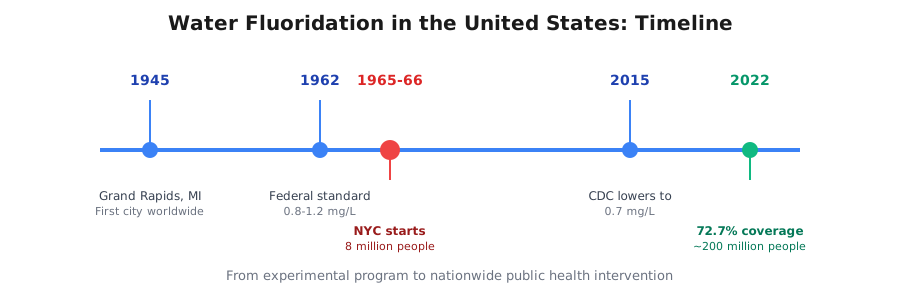
January 25, 1945: Grand Rapids, Michigan became the first city in the world to fluoridate its drinking water. After 11 years, Grand Rapids showed a 60%+ reduction in tooth decay rates among children compared to the control city of Muskegon.
The discovery came from decades earlier research. Dr. Frederick McKay noticed in the early 1900s that some communities had "Colorado Brown Stain" (later called dental fluorosis)—brown mottling on teeth—but also had remarkably few cavities. Dr. H. Trendley Dean's research in the 1930s discovered these communities had naturally occurring fluoride around 1.0 ppm in their water. Further research confirmed 1.0 ppm fluoride reduced tooth decay without severe fluorosis.
ℹ️ CDC Recognition: The CDC named water fluoridation one of "10 Great Public Health Achievements of the 20th Century" alongside vaccinations and safer workplaces. :::
By 2022: 72.7% of Americans on community water systems (62.9% of total US population, approximately 200 million people) received fluoridated water.
📊 Current CDC Recommendations (And Why They Changed)
Current optimal level (2015-present): 0.7 mg/L (milligrams per liter)
That's equivalent to approximately 3 drops of water in a 55-gallon barrel—a tiny amount with measurable effects.
Previous levels (1962-2015): 0.8-1.2 mg/L, with the range varying by climate. Warmer climates recommended lower levels because people drink more water.
Why the change in 2015: The CDC lowered the recommendation because Americans now get fluoride from multiple sources—toothpaste (used by 95% of population), mouth rinses, processed foods and beverages made with fluoridated water. NHANES surveys (1999-2004) documented that 2 out of 5 adolescents showed mild dental fluorosis (tooth streaking or spottiness). The new 0.7 mg/L recommendation balances cavity prevention with minimizing fluorosis risk, reducing fluoride intake from water by approximately 25%.
🗺️ Which Cities Fluoridate Their Water
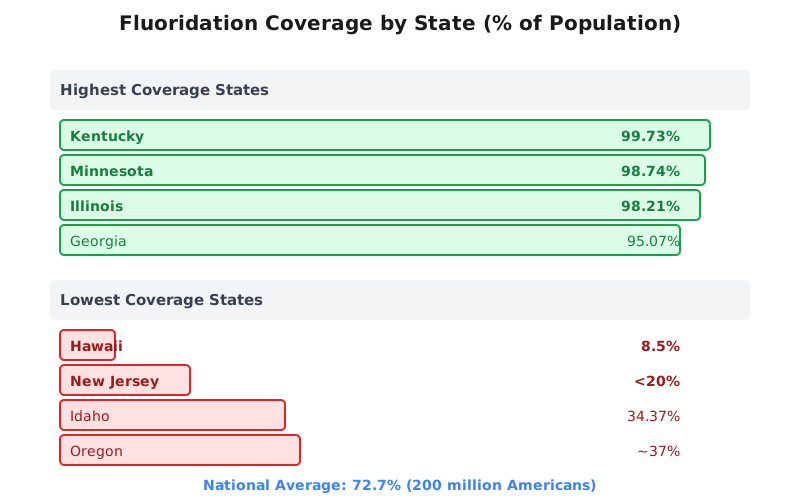
National statistics: 72-73% of Americans on public water systems receive fluoridated water.
Major cities:
- New York City: YES - 0.7 mg/L since 1965-1966 (nearly 8 million people)
- Chicago: YES - Started 1956
- Philadelphia: YES - Started 1954
- Houston: YES - Natural/artificial since 1982
- Dallas: YES - Started 1966
- Phoenix: NO
- San Antonio: NO
- Los Angeles: NO
- San Diego: NO (discontinued after brief use 1952-1954)
💡 Check Your City: Find your city's fluoride levels using our water quality database covering 4,600+ cities across all 50 states. :::
At least 12 states require fluoridation for larger communities, including California, Delaware, Georgia, Illinois, Kentucky, Minnesota, Nebraska, and Ohio.
Globally: Only ~5.4% of world population receives fluoridated water. It's common in the US, Canada, Australia, Ireland, Brazil, and Chile, but rare in Europe (except Ireland).
🦷 The Dental Benefits: What Studies Actually Show
25% reduction in tooth decay for both children and adults—this is the current CDC/ADA consensus based on decades of research.
Return on investment: $20 saved for every $1 spent on fluoridation in communities of 1,000+ people, primarily by avoiding cavity treatment costs.
Real-world impacts when fluoridation stops:
- Juneau, Alaska: Dental caries procedures and costs increased 28-111% after ending fluoridation
- Windsor, Canada (2013): 51% increase in children with decay or requiring urgent care by 2016-2017
- Calgary, Canada: Increased emergency room visits for dental issues after discontinuation
ℹ️ Professional Consensus: The American Dental Association (ADA) "unreservedly endorses" fluoridation, calling it "the single most effective public health measure to prevent tooth decay." Over 100 health organizations endorse it, including WHO, CDC, American Academy of Pediatrics, and American Medical Association. :::
⚠️ Health Concerns: What Concentrations Actually Cause Problems
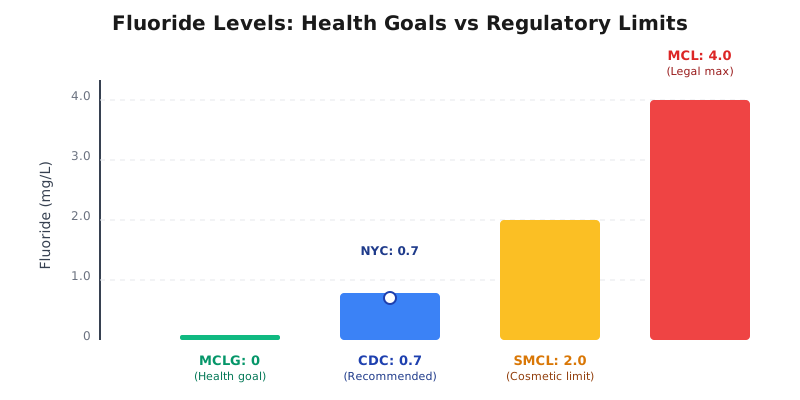
- MCL (Maximum Contaminant Level): 4.0 mg/L (enforceable) - set to prevent crippling skeletal fluorosis
- SMCL (Secondary MCL): 2.0 mg/L (non-enforceable guideline) - set to prevent moderate/severe dental fluorosis
Dental fluorosis at 0.7 mg/L:
- 40% of adolescents show some level (mostly very mild/mild)
- 12% show fluorosis of aesthetic concern (noticeable white spots)
- Risk period: Birth through age 8 while teeth are developing
- Severity: At 0.7 mg/L, nearly zero severe fluorosis; mostly white spots on <50% of enamel
Skeletal fluorosis:
- Stage III (crippling): EPA's 4.0 mg/L MCLG based on preventing this
- Stage II: Chronic joint pain, calcified ligaments, increased bone density
- Virtually nonexistent in US at recommended fluoridation levels
⚠️ 2024 NTP Report on Neurodevelopment: At fluoride levels >1.5 mg/L (double recommended level), the National Toxicology Program found "moderate confidence" association with lower IQ in children (1.63 point decrease per 1 mg/L increase in urinary fluoride). Critical limitation: Studies conducted in Canada, China, India, Iran, Mexico—NONE in US at US fluoridation levels (0.7 mg/L). Report explicitly states: "Does NOT address US community water fluoridation at 0.7 mg/L". Insufficient data to determine if 0.7 mg/L affects children's IQ. :::
No credible evidence at 0.7 mg/L for:
- Cancer (extensively studied by NCI, NAS, Cochrane—no link found)
- Thyroid effects
- Kidney effects (except patients with existing severe kidney disease)
- Cardiovascular effects
🌍 Natural Fluoride: Where It Occurs
Fluoride occurs naturally in all water sources, varying from barely detectable to over 10 ppm. It comes from weathering of fluoride-containing minerals in rock and soil.
Typical levels:
- Surface water (rivers/lakes): Usually 0.1-0.2 mg/L, typically <0.5 mg/L
- Groundwater/wells: Varies widely; can be 0.5-50 mg/L in volcanic/mountainous areas
- Ocean water: 1.2-1.4 mg/L
USGS study of 38,105 US wells (1988-2017):
- 1.6% of drinking-water wells exceeded 4.0 mg/L MCL
- 0.6% of domestic wells exceeded MCL
- Estimated 172,000 people served by domestic wells exceeding MCL
- Over 85% had fluoride <0.7 mg/L (below optimal)
- 28+ million people get water from domestic wells with <0.7 mg/L
- Western US generally has higher natural fluoride than eastern US
High natural fluoride areas globally: Parts of central Australia, western North America, eastern Brazil, many areas of Africa and Asia. ~180 million people worldwide potentially affected by naturally high fluoride (>1.5 mg/L). These areas face legitimate public health concerns requiring defluoridation.
❌ Why Boiling Doesn't Remove Fluoride (And What Does)
Boiling water does NOT remove fluoride because:
- Fluoride has a much higher boiling point than water
- As water evaporates, fluoride stays in the liquid
- Concentration INCREASES as volume decreases
- This makes the fluoride problem worse, not better
🚨 Boiling Concentrates Fluoride: Boiling water removes bacteria, viruses, and some volatile organic compounds like chlorine—but NOT dissolved minerals like fluoride, lead, arsenic, or nitrates. :::
Methods That Actually Work
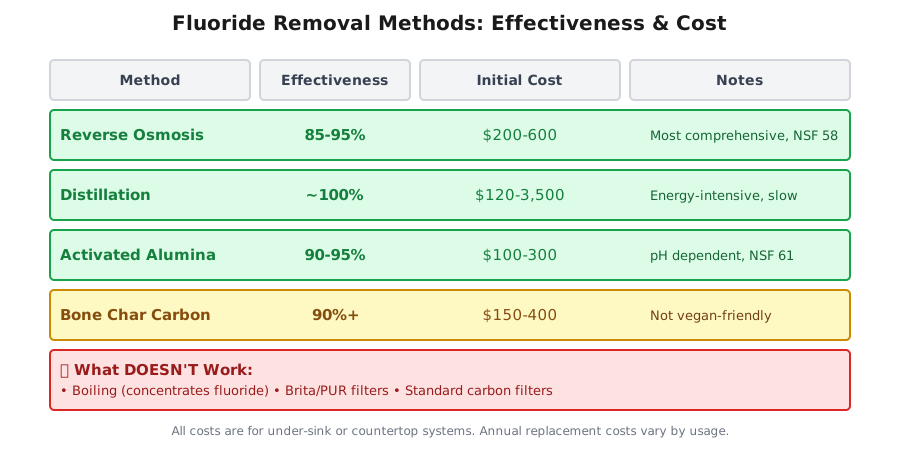
Reverse osmosis (85-95% removal):
- How it works: Forces water through 0.0001-micron membrane that physically blocks fluoride ions
- NSF certification: NSF/ANSI Standard 58
- Cost: $200-600 for under-sink systems; $2,000+ for whole-house
- Also removes: Lead, nitrates, arsenic, pharmaceuticals, chlorine, virtually everything
- Considerations: Also removes beneficial minerals (consider remineralizer); wastes 3-4 gallons per gallon produced
Activated alumina filters (90-95% removal):
- How it works: Aluminum oxide with high surface area traps fluoride through adsorption
- Optimal conditions: pH 5.5-6.5 most effective; works at pH <8.5
- NSF certification: NSF/ANSI 61 certified products available
- Cartridge life: ~1 year for family of four
- Good for: Countertop or under-sink installations
Distillation (approaching 100% removal):
- How it works: Heats water to steam; fluoride cannot become gaseous and stays behind
- Effectiveness: Removes nearly all fluoride
- Limitations: Energy-intensive, slow (not practical for large families), removes beneficial minerals
- Cost: $120-3,500 depending on size
💡 Practical Recommendation: For most households concerned about fluoride, an NSF 58-certified reverse osmosis system provides the best balance of effectiveness ($200-600), comprehensive contaminant removal, and convenience. Learn more about RO systems. :::
What does NOT work:
- Brita-style carbon filters: Remove chlorine and improve taste but do NOT remove fluoride
- Standard activated carbon: Not designed or effective for fluoride
- Water softeners: Remove hardness minerals (calcium/magnesium) but NOT fluoride
- Letting water sit: Fluoride doesn't evaporate
- Boiling: Concentrates fluoride as water evaporates
🗽 NYC's Fluoridation: The Specific Details
NYC Department of Environmental Protection fluoridation:
- Current level: 0.7 mg/L (0.7 ppm) since adjustment from previous higher levels
- Started: 1965-1966
- Coverage: Nearly 8 million NYC residents + 1 million in surrounding counties = 9 million total
- Mandate: Article 141.05 NYC Health Code requires fluoride addition
Water source: From 19 reservoirs and 3 controlled lakes across ~2,000 square mile watershed in upstate NY; water travels up to 125 miles to the city.
Testing: NYC DEP tests water hundreds of times daily, 365 days/year. 357,700 health and quality tests conducted in 2023. Samples collected from reservoirs, aqueducts, treatment facilities, and 1,000+ street-side stations. No sample exceeded 0.8 mg/L in 2024.
Compliance: Meets all federal and state standards:
- CDC target: 0.7 mg/L ✓
- EPA MCL: 4.0 mg/L (far below) ✓
- EPA SMCL: 2.0 mg/L (well below) ✓
- NY State DOH: 2.2 mg/L standard ✓
Historical significance: 1966 marked the second-largest annual expansion of fluoridation in US history—nearly 8 million people gained fluoridated water when NYC started.
⚖️ The Controversy: Valid Concerns vs Misinformation
Valid, evidence-based concerns:
- High-level exposure (>1.5 mg/L): 2024 NTP report shows "moderate confidence" link to lower IQ at levels double the US recommendation
- Dental fluorosis at recommended levels: 40% of adolescents show some level; 12% show cosmetically concerning effects
- Ethical issues: "Mass medication" without individual consent; no dose control based on individual factors; freedom of choice arguments
- Vulnerable populations: Kidney disease patients accumulate more fluoride; infants fed formula mixed with fluoridated water; people with high water consumption
Evidence-based safety at 0.7 mg/L:
- Dental benefits well-established: 25% cavity reduction consistently documented over 75+ years
- No evidence of harm at recommended levels: No credible cancer link (extensively researched), no adverse effects at 0.7 mg/L per CDC/ADA consensus
- Cost-effective public health: $20 saved per $1 spent; reduces health disparities
Common misinformation:
⚠️ "Fluoride is rat poison" - Context matters: dose makes the poison. High concentrations are toxic; low concentrations are beneficial (same principle as oxygen, vitamin A, selenium).
⚠️ "Causes cancer" - Extensively studied; no credible evidence. NCI, NAS, Cochrane reviews all found no link.
⚠️ "Lowers IQ at all levels" - NTP report limited to >1.5 mg/L (double recommended); studies not conducted in US at US levels; insufficient evidence for 0.7 mg/L effects.
⚠️ "Not natural" - Fluoride occurs naturally in all water; fluoridation adjusts to optimal level (similar to vitamin D in milk, iodine in salt).
🔧 Your Fluoride Action Plan
If you want to remove fluoride from drinking water:
-
Install reverse osmosis system ($200-600 under-sink): Most practical and comprehensive; removes 85-95% fluoride plus lead, nitrates, chlorine, etc.
-
Activated alumina filter ($100-300): Specifically targets fluoride; 90-95% removal; requires pH optimization
-
Distillation unit ($120-3,500): Nearly complete removal but slow and energy-intensive
Don't waste money on:
- Brita or PUR filters (don't remove fluoride)
- Standard carbon filters
- Water softeners
- "Fluoride removal" products without NSF certification
If you're concerned about fluorosis in young children:
- Use low-fluoride water for infant formula (distilled, RO, or bottled water labeled "fluoride-free")
- Supervise tooth brushing; use rice-grain sized toothpaste for children under 3
- Check your water's fluoride level on your utility's website or annual report
If you live in area with naturally high fluoride (>2 mg/L):
- Test your well water if using private well
- Consider whole-house RO or activated alumina system
- This is a legitimate health concern at these levels
🔬 The Balanced Bottom Line
Water fluoridation at 0.7 mg/L has 75+ years of evidence supporting safety and effectiveness—25% cavity reduction, endorsed by 100+ health organizations, with minimal evidence of harm at this concentration. The 2024 NTP report raised valid concerns about IQ effects at >1.5 mg/L (double the recommended level) but explicitly does not address US fluoridation at 0.7 mg/L.
Valid discussions exist about ethics (mass medication without consent), dental fluorosis (40% show some level, 12% cosmetically noticeable), and whether benefits outweigh risks now that fluoride is widely available in toothpaste.
Claims about cancer, widespread IQ effects, or toxicity at recommended levels are not supported by evidence. Multiple comprehensive reviews by NCI, NAS, Cochrane, CDC, and others found no credible links.
If you want to remove fluoride, you need reverse osmosis ($200-600), distillation, or activated alumina—not boiling or standard filters. But the data suggests that for most people, fluoride at 0.7 mg/L provides dental benefits with minimal risk. The real concerns are in areas with naturally high fluoride (>2 mg/L) where defluoridation is legitimately needed.
NYC residents: Your tap water contains 0.7 mg/L fluoride, extensively tested and monitored by NYC DEP with 357,700+ quality tests annually. It meets all federal and state standards and has prevented countless cavities over 60 years. Whether that trade-off for mild fluorosis in some children justifies continued fluoridation is a policy question—but the safety at this level is well-established in the scientific literature.
Check your city's water quality data to see fluoride levels in your area and make an informed decision for your household.