If you started a GLP-1 medication—Ozempic, Wegovy, Mounjaro, Zepbound, Saxenda, Trulicity, Rybelsus—and noticed you're suddenly not thirsty, that's not in your head. The same drug action that quiets your appetite also quiets your thirst signal. The clinical name for it is hypodipsia: reduced thirst perception, driven by the same hypothalamic mechanism that suppresses hunger. It's not a side effect. It's an expected pharmacological effect of the entire drug class.
The practical consequence is dehydration on autopilot. You're not feeling thirsty when your body needs water, so you don't drink. Mild dehydration becomes routine. And then the most common GLP-1 side effects—fatigue, constipation, headaches, nausea—get worse than they need to be, because every one of them is amplified by being underhydrated.
This guide explains the mechanism in plain language, walks through what the research actually says about how much water you need, and lays out a practical system for hydrating well on a GLP-1 without relying on willpower or thirst signals that aren't coming.
If you're on a GLP-1 medication, target 80–100 oz of water per day, sip throughout the day rather than chugging, consider electrolytes during the first 1–3 months, and track your intake—relying on thirst alone will reliably undershoot. Keep reading for the science behind those numbers and a system for making hydration a background habit. :::
💊 If You Started a GLP-1 and the Thirst Just... Stopped
The story most people tell is the same. They start a GLP-1—usually for type 2 diabetes or, increasingly, for weight management—and within the first few weeks of dose escalation, they notice two things changing at the same time. They're not as hungry. And they're not really thirsty either. Some people describe it as forgetting to drink for a whole afternoon. Others realize they've gone an entire workday without finishing a single bottle. Their appetite signal and their thirst signal both went quiet at once.
This isn't a coincidence. It isn't something the user is doing wrong. It's the mechanism of the drug doing exactly what it's designed to do—except the appetite suppression is the marketed effect, and the thirst suppression is the part nobody talks about until you're already on the medication and wondering why you can't seem to drink enough water without setting an alarm.
The good news: it's predictable, well-documented, and manageable. The fix isn't more willpower. It's a system that doesn't depend on signals that aren't going to show up.
🧠 The Mechanism: Why Your Brain Stops Asking for Water
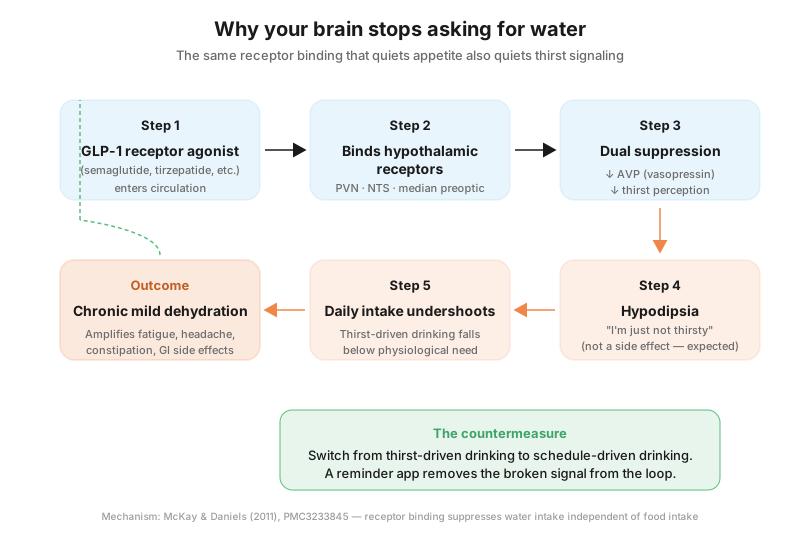
GLP-1 receptor agonists—the formal drug-class name for medications like semaglutide (Ozempic, Wegovy, Rybelsus), tirzepatide (Mounjaro, Zepbound), and liraglutide (Saxenda, Victoza)—were originally designed to mimic a gut hormone called glucagon-like peptide-1. In the body, GLP-1 helps regulate insulin release and slows gastric emptying, which is why these drugs work so well for type 2 diabetes and, secondarily, for weight management.
But GLP-1 receptors aren't only in the gut. They're scattered throughout the central nervous system, including dense expression in the hypothalamus—the brain region that regulates the body's homeostatic drives, including hunger and thirst. When a GLP-1 receptor agonist crosses into the brain (or activates peripheral receptors that signal upstream to the hypothalamus), it acts on those same neurons.
The pharmacological effect on appetite is the marketed one. The effect on thirst is the same neural circuitry, doing the same kind of suppression—just on a different drive.
This is documented in primary research. In a 2011 study published in the American Journal of Physiology, McKay and Daniels demonstrated that GLP-1 receptor agonists suppress water intake independent of effects on food intake. They showed that exendin-4—an early GLP-1 receptor agonist closely related to today's drugs—reduces water consumption when injected directly into specific hypothalamic nuclei (the paraventricular hypothalamic nucleus and the nucleus of the solitary tract), and that this effect doesn't require an effect on hunger to occur. Two distinct drives, one mechanism, both suppressed.
A more recent line of research has begun to map out additional pathways. The median preoptic nucleus—a small structure near the front of the hypothalamus—appears to be a major site where GLP-1 signaling tunes thirst perception. Some preliminary work in patients with arginine vasopressin (AVP) deficiency suggests that GLP-1 RAs may interact with vasopressin signaling, the hormone that regulates how much water your kidneys conserve. The clinical implications are still being worked out, but the directional finding is consistent: GLP-1s push the body toward letting more water leave, while suppressing the drive to replace it.
The takeaway is simple. Your thirst is being pharmacologically dampened. The drug isn't broken; it's working as designed. But because the body's primary signal that says "drink water" has been quieted, you have to provide an external prompt—a schedule, a tracker, a reminder—or you will reliably underhydrate.
Hypodipsia is the clinical term for reduced thirst perception. It's not the same as adipsia (no thirst at all) and it's not a sign that anything is going wrong. It's an expected, well-documented effect of GLP-1 receptor agonist therapy. :::
📏 How Much Water You Actually Need on a GLP-1
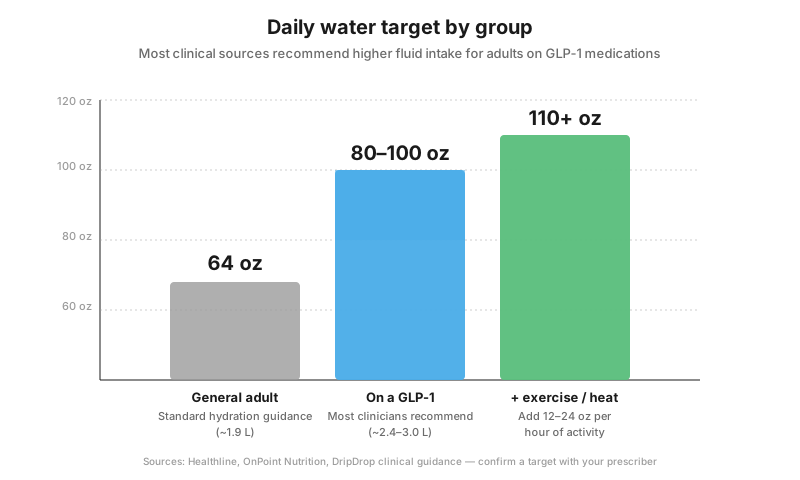
The general adult hydration guidelines—the "8 cups a day" rule, or the National Academies' adequate intake recommendations of about 91 oz/day for women and 125 oz/day for men from all sources including food—were never written with GLP-1 patients in mind. They assume a typical thirst response, typical food volume (which contributes meaningful water), and typical activity. None of those assumptions hold cleanly for someone in active GLP-1 therapy:
- Thirst is suppressed, so the body's homeostatic safety net is offline.
- Food intake drops dramatically, sometimes by 30–40%, which means the water you normally get from food (typically 20% of total intake) drops with it.
- Side effects can pull water out: nausea sometimes leads to vomiting; some patients experience diarrhea; even constipation, paradoxically, requires more water in the gut to manage.
- Rapid weight loss creates fluid shifts that can deplete electrolytes and total body water.
Most clinicians advising GLP-1 patients converge on a target in the range of 80–100 ounces (2.4–3.0 liters) of fluid per day for adults, and more for people who exercise heavily or live in hot climates. This is higher than the general guideline because the assumptions baked into the general guideline don't apply.
You can find this range echoed across patient-facing clinical sources: Healthline's clinical review on GLP-1 hydration, OnPoint Nutrition's GLP-1 hydration guidance, and DripDrop's GLP-1 hydration article all land in this same window. Individual prescribers may adjust based on body size, kidney function, dose, and other medications—always confirm a target with your own clinician.
What does 80–100 oz actually look like? A standard 16.9-oz bottled water is ~17 oz; you're looking at roughly 5–6 of those per day. A typical 24-oz refillable bottle gets you there in 3.5–4 fills. The point isn't a magic number—it's that the target is meaningfully higher than what most adults drink unprompted, and dramatically higher than what your suppressed thirst will tell you to drink.
| Audience | Typical daily intake guidance | Source |
|---|---|---|
| General adult women | ~91 oz/day from all sources | National Academies (Institute of Medicine) |
| General adult men | ~125 oz/day from all sources | National Academies (Institute of Medicine) |
| GLP-1 patients (most clinicians) | 80–100 oz of fluid intake | Concordant clinical guidance (Healthline, OnPoint, DripDrop) |
| GLP-1 patients with heavy exercise or hot climate | 100–130 oz/day | Adjusted upward |
Note the framing difference. The general guideline is "from all sources including food," and the GLP-1 guideline is "fluid intake"—because food intake is reduced. Tracking actual ounces of liquid you drink is the more reliable metric for GLP-1 patients.
🚰 Does Tap Water Quality Matter More When You're Drinking This Much?
If you're targeting 80–100 oz/day from your tap, the cumulative exposure to whatever's in your local water supply goes up proportionally. For most U.S. water systems, this isn't a problem—federal Maximum Contaminant Levels are set well below the levels associated with health effects, and a well-managed system delivers safe water. But two specific cases deserve attention for GLP-1 patients pushing their daily intake:
-
If your local water has elevated lead (above the 15 ppb action level, or detected at any level if you have children, are pregnant, or are trying to conceive): a higher daily volume from a lead-impacted source is a higher cumulative exposure. Read our guide to lead in tap water to understand the risk profile and what to do about it.
-
If you're sensitive to chlorine taste, drinking more water from a chlorinated source can become genuinely unpleasant—and an unpleasant water source means you'll drink less of it, which on a GLP-1 is the opposite of what you need. Our guide to improving tap water taste covers practical filter options that handle chlorine without breaking the bank.
If you're not sure where your local water stands, check your city's water quality grade on TapWaterData by entering your ZIP code. Most U.S. systems test well; you'll know within a minute whether your tap is a clean target for the higher daily volume your medication needs.
⚡ The Electrolyte Question
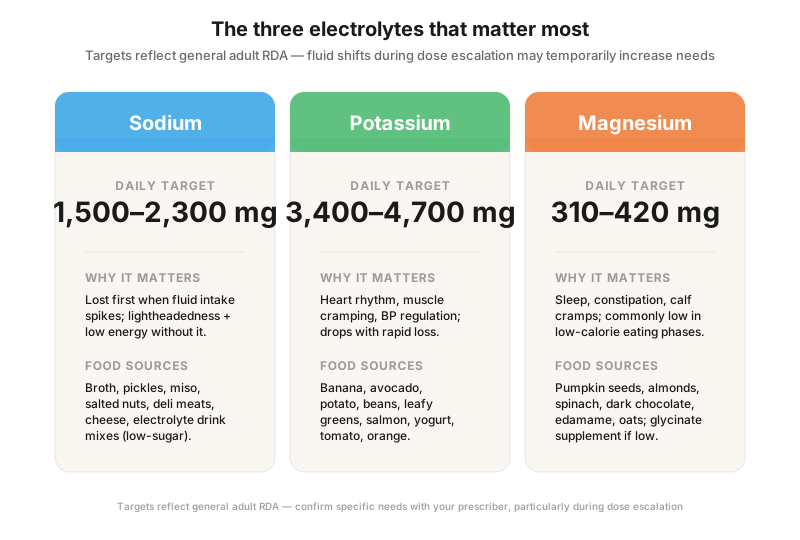
Here is the part that catches many people off-guard: drinking more water alone, without paying attention to electrolytes, can sometimes make you feel worse, not better. The mechanism is dilutional—if you increase plain water intake substantially without replacing the sodium, potassium, and magnesium you're losing through normal kidney function (and any GI side effects), you can mildly disrupt your electrolyte balance.
This is especially relevant in the first 1–3 months of GLP-1 therapy, when:
- Your dose is being titrated up, and side effects are most pronounced.
- Rapid weight loss is creating fluid shifts that can deplete minerals.
- Reduced food intake means you're getting less sodium and potassium from your diet.
- Any GI side effects (nausea, vomiting, diarrhea) accelerate electrolyte loss.
Most clinicians advising GLP-1 patients suggest considering electrolyte support during this period, particularly:
- Sodium: 1,500–2,300 mg/day for most adults, more if you sweat heavily or experience GI side effects. A pinch of salt in your water bottle, low-sodium broth, or low-sugar electrolyte products all work.
- Potassium: ~3,500 mg/day target. Whole-food sources (banana, avocado, sweet potato, leafy greens) are ideal but harder to hit when food intake is suppressed.
- Magnesium: ~310–420 mg/day. Dark leafy greens, nuts, and seeds—again, harder to hit on a GLP-1—or a 200–400 mg supplement.
Most low-sugar electrolyte products work well for this purpose. Avoid high-sugar sports drinks during the first weeks of dose escalation—they add carbohydrate load that can interact with the appetite and glucose effects of the medication, and the sugar can worsen nausea on a slow-emptying stomach. :::
A lot of patients find electrolyte powders (Liquid IV, LMNT, Drip Drop, Ultima, generic store-brand options) easier than salting water by hand. The cost varies widely; the active ingredients are roughly the same. Read the sodium-per-serving label—lower is gentler, higher is appropriate if you're losing a lot to GI symptoms.
This is general guidance, not a prescription. If you have kidney disease, heart failure, or you're on medications that affect potassium (ACE inhibitors, ARBs, certain diuretics), confirm an electrolyte plan with your prescriber before adding supplements.
☕ What Counts: Coffee, Tea, Sparkling, Broth
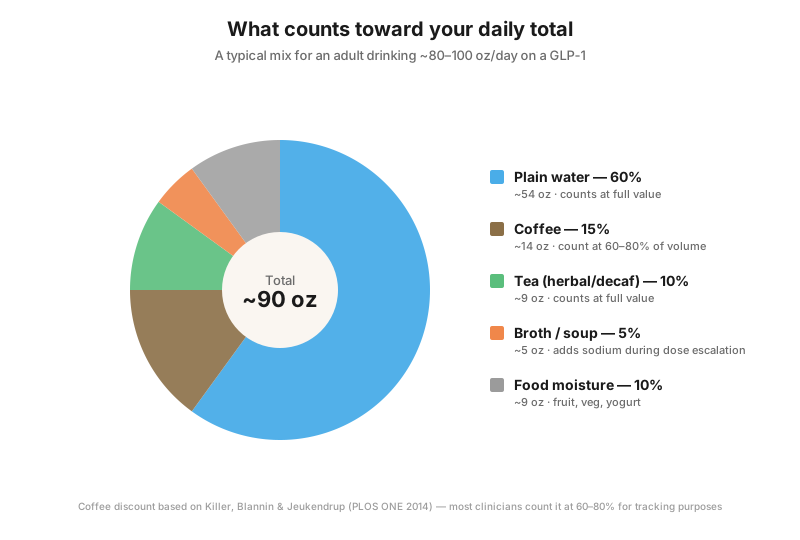
The classic question: does coffee count?
The short answer is mostly yes, with a discount. The myth that coffee dehydrates you is largely outdated; the diuretic effect of caffeine in habitual coffee drinkers is mild and largely offset by the fluid volume of the coffee itself. A 2014 study published in PLOS ONE found that moderate coffee consumption (4 cups/day in habituated drinkers) provided similar hydration to plain water on most clinical markers.
The longer answer for GLP-1 patients: prioritize plain water, but don't agonize over counting coffee. A reasonable rule:
| Source | Counts toward hydration target | Notes |
|---|---|---|
| Plain water | 100% | The reliable baseline; aim for the majority of your intake |
| Sparkling/seltzer water (unsweetened) | 100% | Identical to plain water; the bubbles don't change anything |
| Coffee (caffeinated) | 60–80% of volume | Mild diuretic effect; safer to count it at a discount |
| Tea (caffeinated or herbal) | 80–100% | Less caffeine than coffee; herbal teas are essentially water |
| Low-sodium broth | 100% (and helpful for electrolytes) | Good in the first weeks of dose escalation |
| Sugar-free flavored water | 100% | Fine; the flavoring helps people drink more, which is the point |
| Sports drinks (high-sugar) | Discount heavily | Sugar content is the issue, not the water |
| Alcohol | 0% (counts against, mildly) | Mild diuretic; minimize during dose escalation |
A common pattern: people on GLP-1s find their relationship with food shifts so substantially that food no longer feels like a satisfying source of fluid (the way a piece of fruit or a bowl of soup might have, pre-medication). This means the proportion of your hydration that has to come from drinks-you-deliberately-consume goes up, and the cushion from food-water shrinks. Plan for that.
🛠️ Making Hydration Automatic (Without Willpower)
Here's the operating principle: don't rely on a thirst signal that has been pharmacologically suppressed. Instead, build a system that prompts you to drink on a schedule, tracks total volume honestly, and adapts to your real-world rhythm.
The mechanics that consistently work:
1. Schedule water around anchors, not thirst. Pair drinking with existing habits: a glass when you wake up, a bottle on your desk by 10am, a refill before lunch, another by 3pm, one with dinner, one before bed. Six anchors × ~16 oz each = ~96 oz, which puts you squarely in the recommended range.
2. Use a vessel that makes the volume visible. A 24- or 32-oz refillable bottle that you can mark with the time of day (some bottles have hourly markings printed; you can also just use a piece of tape) makes "where should I be by now?" a glance, not a calculation.
3. Track total ounces, not vessel counts. This is where most consumer hydration apps fail GLP-1 patients. "2 of 4 bottles ✓" hides the actual volume. If your bottles are different sizes—or if you drink coffee, tea, broth, anything else—a vessel-count display deceives you. Track ounces. It's the only honest metric when you're trying to hit a real number without thirst as feedback.
4. Use external prompts. This is the real value of a tracking app on a GLP-1: it's not measuring something you'd intuit anyway. It's prompting you to drink at intervals when your body isn't going to. Notifications, widget glances, an Apple Watch tap—all of them work when thirst doesn't.
If you have an iPhone, the Waterd app was built specifically for the "thirst is offline" use case. It tracks total ounces (not vessel counts), runs adaptive reminders that learn your daily rhythm, keeps everything on-device for medical-context privacy, and is free with no ads. The Premium tier ($1.99/mo, $4.99/yr, or $7.99 lifetime) adds Apple Intelligence features for personalized goals and natural-language logging — but the core hydration tracking is free forever. :::
5. Make it easier than not drinking. A bottle on the desk gets emptied. A bottle in the cupboard doesn't. A glass of water by the bed gets sipped first thing. A glass in the kitchen does not. Logistics matter more than motivation when you're trying to compensate for a missing biological signal.
6. Don't chug. Large volumes at once are a known trigger for GLP-1 nausea, since gastric emptying is slowed by the medication. Sip throughout the day. The same 80 oz spread across 12 hours is gentle; jammed into the last 2 hours of the day, it's a recipe for an unpleasant evening.
🚨 Warning Signs You're Underhydrated on a GLP-1
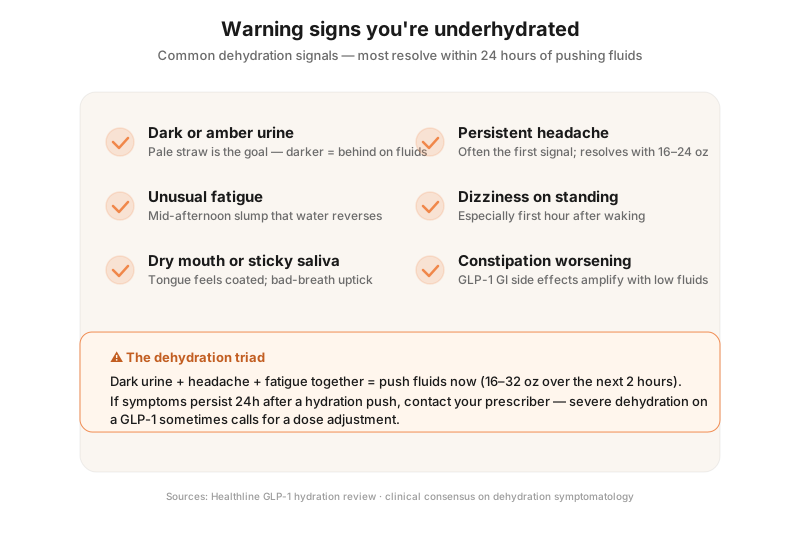
The body has clear signs of dehydration, but several of them overlap with GLP-1 side effects, which makes them easy to misattribute. Learning to recognize the difference matters:
- Dark yellow or amber urine — the most reliable single sign. Pale straw color = well hydrated. Dark amber = dehydrated. (Multivitamins can color urine bright yellow; don't be fooled by that one.)
- Headaches — especially mid-afternoon. GLP-1s can cause headaches independently, but dehydration headaches usually resolve within an hour of significant fluid + electrolyte intake.
- Fatigue out of proportion to your sleep — you slept 8 hours but feel like you slept 5.
- Dizziness when standing (orthostatic) — a sign of low blood volume from dehydration. Worth taking seriously.
- Constipation that's getting worse — GLP-1s slow gastric emptying, which slows the whole GI tract; insufficient fluid turns this from manageable to chronic.
- Dry mouth + dry skin — both increase as total body water drops.
- Cramps (legs, hands) — usually electrolyte-driven, often appearing when you've increased water but not sodium/potassium/magnesium.
Dark urine + headache + fatigue is the dehydration triad. If all three are present and they don't resolve within a few hours of a hydration push (water + electrolytes), contact your prescriber. Severe dehydration on a GLP-1 sometimes requires a temporary dose hold or downward dose adjustment — that's a clinical decision, not something to manage alone. :::
The flip side: occasional mild thirst is fine, and slightly above-normal urine output during a hydration push is fine too. You're recalibrating a system that's been quietly underrun for weeks. Some adjustment is normal.
❓ Frequently Asked Questions
The structured FAQ block below covers the questions that come up most often. The answers are also surfaced as Google rich results via FAQ schema markup—handy if you're sharing this guide with a friend or family member who's just starting their medication.
The FAQs are rendered automatically from the post's structured data — see the accordion at the bottom of this page.
A Note on This Guide
This guide synthesizes peer-reviewed research, concordant clinical guidance from registered dietitians and pharmacists writing for patient audiences, and observational reports from the GLP-1 patient community. It is not medical advice. Hydration targets are starting points for conversation with your prescriber, not prescriptions. If anything in your individual clinical picture conflicts with what's written here—kidney disease, heart failure, electrolyte-affecting medications, history of disordered eating, any condition that affects fluid balance—your prescriber's guidance overrides anything on this page.
Waterd, the iOS app referenced in this guide, is a product of TapWaterData LLC. We mention it because it solves the specific problem this guide describes, and because we built it. It's free for the core hydration tracking; the Apple Intelligence Premium tier is genuinely optional. There are other hydration apps that work; we think ours is the most appropriate fit for the GLP-1 use case for the specific reasons described in the "Making Hydration Automatic" section above—but the system, not the tool, is what matters.
If this guide was useful, the most helpful thing you can do is share it with someone else who's just starting a GLP-1. Most people on these medications were never told about the thirst-suppression effect in their initial counseling. Forwarding this to one person who's currently confused about why they can't stay hydrated is worth more than any other engagement metric.
For the practical "how do I actually do this every day" version of the guide: the Waterd app's GLP-1 page distills the system into the daily mechanics and the app that runs it.